

Introduction
Picking out a book for your child should feel exciting. Most of the time it is. But any parent who has watched their child struggle through a book that seemed perfectly age-appropriate knows that finding the right reading level for kids is not always as simple as checking the age range on the back cover.
Reading level for kids matters more than most people realize! A book that is too difficult does not just slow a child down. It can make reading feel like a chore, chip away at their confidence, and in some cases make them want to avoid books altogether. A book that is too easy is less harmful, but it misses an opportunity to stretch their skills and keep them genuinely engaged.
The good news is that figuring out the right reading level for your child does not require a degree in education. There are a few simple tools and signs you can use at home. They work just as well as the ones teachers use in classrooms every day.
The Five Finger Rule: A Quick Way to Check Reading Level for Kids

This is one of the most reliable quick checks teachers use to assess reading level for kids. It requires nothing but the book itself.
Ask your child to open to a random page somewhere in the middle of the book and read it silently. Every time they come across a word they do not know, they hold up one finger. By the end of the page, count the fingers:
- 0–1 fingers: The book may be a little easy, but that is not necessarily a problem — more on that later.
- 2–3 fingers: This is the sweet spot. The book is challenging enough to build vocabulary without overwhelming them.
- 4–5 fingers: The book is likely too difficult for independent reading at this stage.
This test is not perfect. Some pages are naturally harder than others. But as a quick gut check for reading level for kids before committing to a book, it is surprisingly accurate. Kids can even do it on their own once they know how.mitting to a book, it is surprisingly accurate and easy for children to do on their own once they know how.
Understanding Lexile Scores and AR Levels
If you want a more precise measurement of reading level for kids, there are two scores worth knowing about: a Lexile score and an AR (Accelerated Reader) level. Most published children’s books have both.
What Is a Lexile Score?
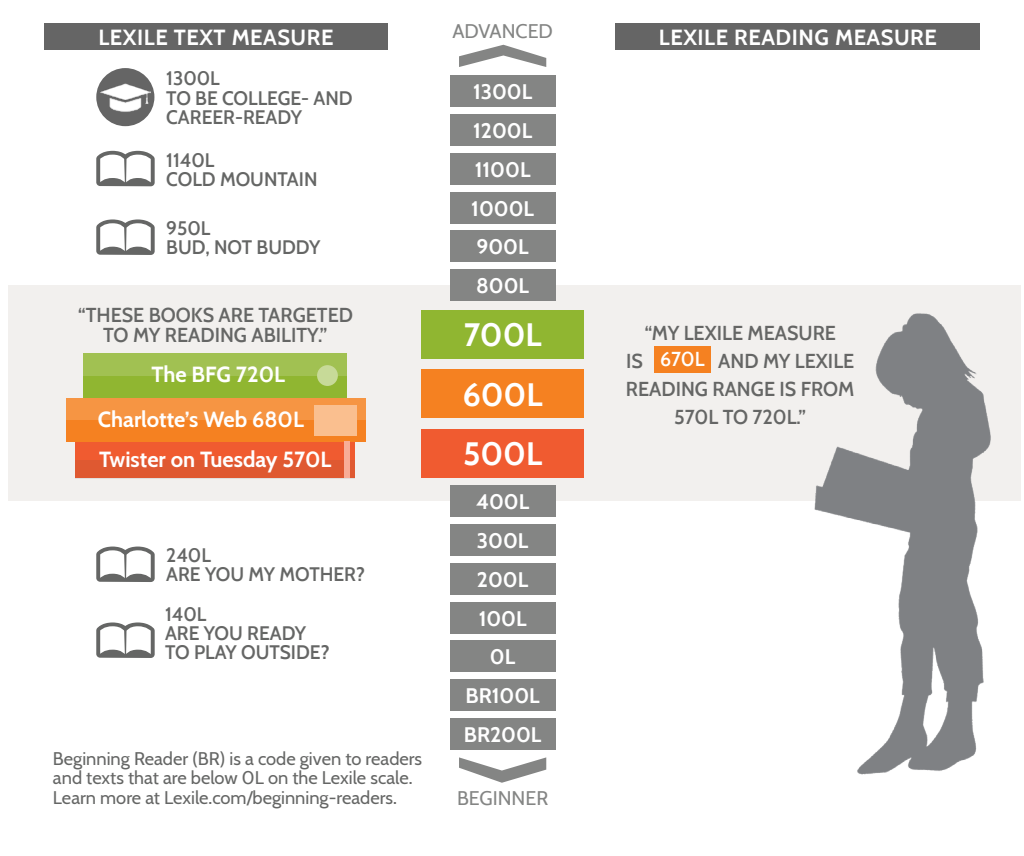
Lexile scores measure the complexity of a text based on sentence length and word difficulty. They appear as a number followed by an “L” — for example, 500L or 720L. A higher number means a more complex text. Here is a rough guide to where different grades typically fall:
| Grade Level | Typical Lexile Range |
|---|---|
| Kindergarten | Up to 300L |
| 1st Grade | 200L – 400L |
| 2nd Grade | 300L – 500L |
| 3rd Grade | 400L – 600L |
| 4th Grade | 500L – 700L |
| 5th Grade | 600L – 800L |
What Is an AR Level?
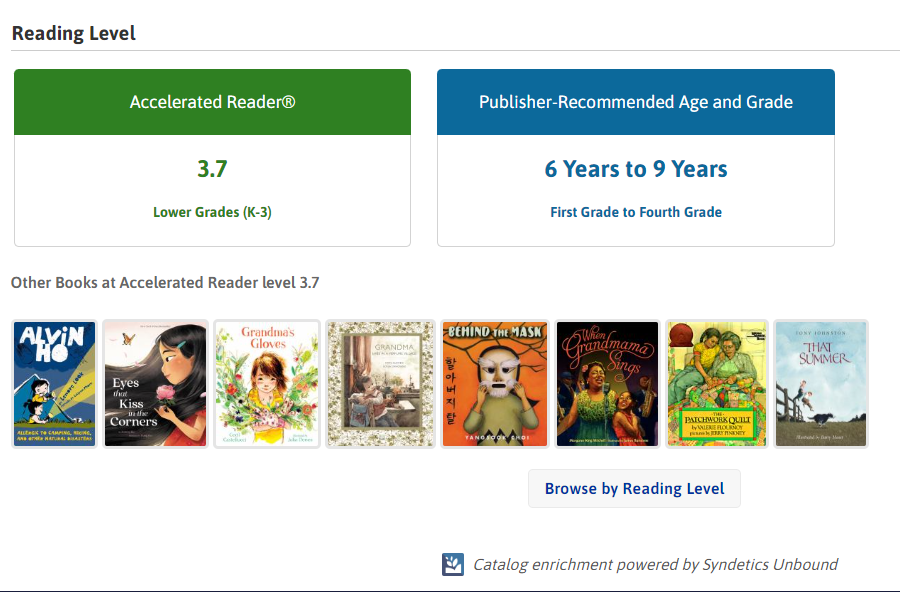
AR levels work similarly but use a grade equivalent instead. An AR level of 4.8 means the book reads at roughly a 4th grade, 8th month level.
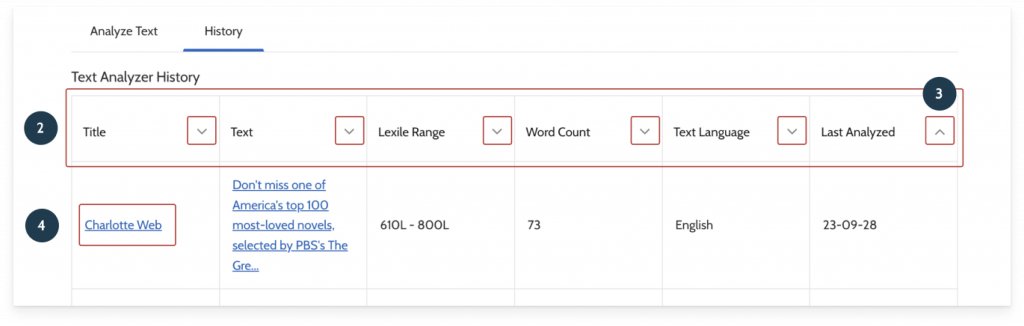
You can look up the Lexile score and AR level of almost any children’s book for free at Lexile.com or arbookfind.com. Just type in the title and you will get the numbers instantly.
A Real Classroom Example
The BFG by Roald Dahl is often recommended for younger readers. But it has a Lexile score of 720L and an AR level of 4.8. The publisher recommends it for ages 8–12, which is roughly grades 3 through 7. It is frequently assumed to be the right reading level for kids in 2nd grade. In reality, it is closer to a 4th or 5th grade book. Knowing how to look these numbers up can save a lot of frustration.
Using Epic! to Find Level-Appropriate Books
Once you understand Lexile scores and reading levels, the next challenge is finding books in the right range. They also need to be books your child actually wants to read. This is where Epic! can help parents find the right reading level for kids.
Epic! is a children’s digital library with over 40,000 books. One of its standout features is that it recommends books based on a child’s age, reading history, and interests. This makes it much easier to browse level-appropriate titles. For parents who are not sure where to start, the built-in filtering takes a lot of the guesswork out of finding the right reading level for your child.
Epic! also includes read-aloud and audiobook options with professional narration. This is a great fit for children who are not yet reading independently. They can still engage with more complex stories at their listening level — exactly the distinction covered in the section below.
A practical tip:
Look up your child’s Lexile range using the table above. Then use that number as a reference point when browsing Epic!’s library. It helps ensure the books they choose are a genuine match for where they are right now.
Signs a Book Is Too Hard for Your Child’s Reading Level
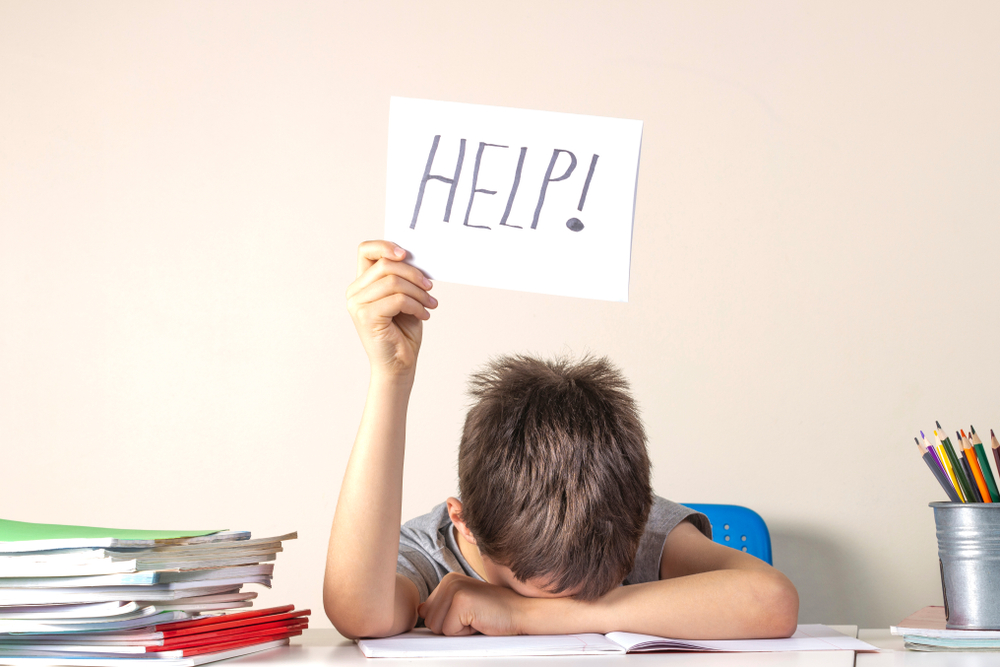
SSometimes the numbers are not available. Other times you just want to watch your child in action. Here are the signs to watch for:
- They stop frequently while reading aloud, losing their place or stumbling over words on nearly every line
- They cannot summarize what just happened after reading a page or chapter
- They show avoidance behaviors — suddenly needing water, or finding any excuse not to sit down with the book
- They get visibly frustrated or say things like “this is boring” when what they really mean is “this is hard”
- Read-aloud sessions feel exhausting for both of you, with more time spent on individual words than the story
One important thing to know: a child can sometimes decode words without actually understanding them. Decoding and comprehension are two separate skills. A book can be above the right reading level for kids in one area while being manageable in the other. If your child reads fluently but cannot tell you what the story was about, the book may be within their decoding range but above their comprehension level.
Signs a Book Is Too Easy for Your Child’s Reading Level

On the other end, a book that is significantly below a child’s level is not ideal either — though it is far less On A book that is significantly below the right reading level for your child is not ideal either. It is far less damaging than one that is too hard, but there are still signs to watch for:
- They finish chapters or entire books unusually fast without absorbing the content
- They cannot recall specific details shortly after reading
- They seem bored or distracted during reading time despite being capable readers
- There are no unfamiliar words at all across multiple pages
That said, easy books are not always bad. A child going through a stressful time or needing a confidence boost can benefit from breezing through something comfortable and fun. The goal is not always maximum difficulty. It is to keep reading enjoyable while still growing.
Read-Aloud Level vs. Independent Reading Level

This is one of the most important distinctions in children’s literacy. It is also one that a lot of parents do not know about when thinking about reading level for kids.
Every child has two reading levels. The first is the level at which they can read independently. The second is the level at which they can understand a book when someone else reads it to them. A child’s listening comprehension — their read-aloud level — is almost always significantly higher than their independent reading level, especially in the early grades.
A book like The BFG may be too complex for a 2nd grader to read alone. But it could still be a wonderful shared experience if a parent or teacher reads it aloud. The vocabulary, the story, the humor — all of it is accessible to a 7-year-old’s imagination even if the sentences are too complex to decode independently.
So when choosing a book, ask yourself: is this for them to read on their own, or will we read it together? The answer can completely change which book is the right reading level for your child.
Why Interest Matters Just as Much as Reading Level for Kids
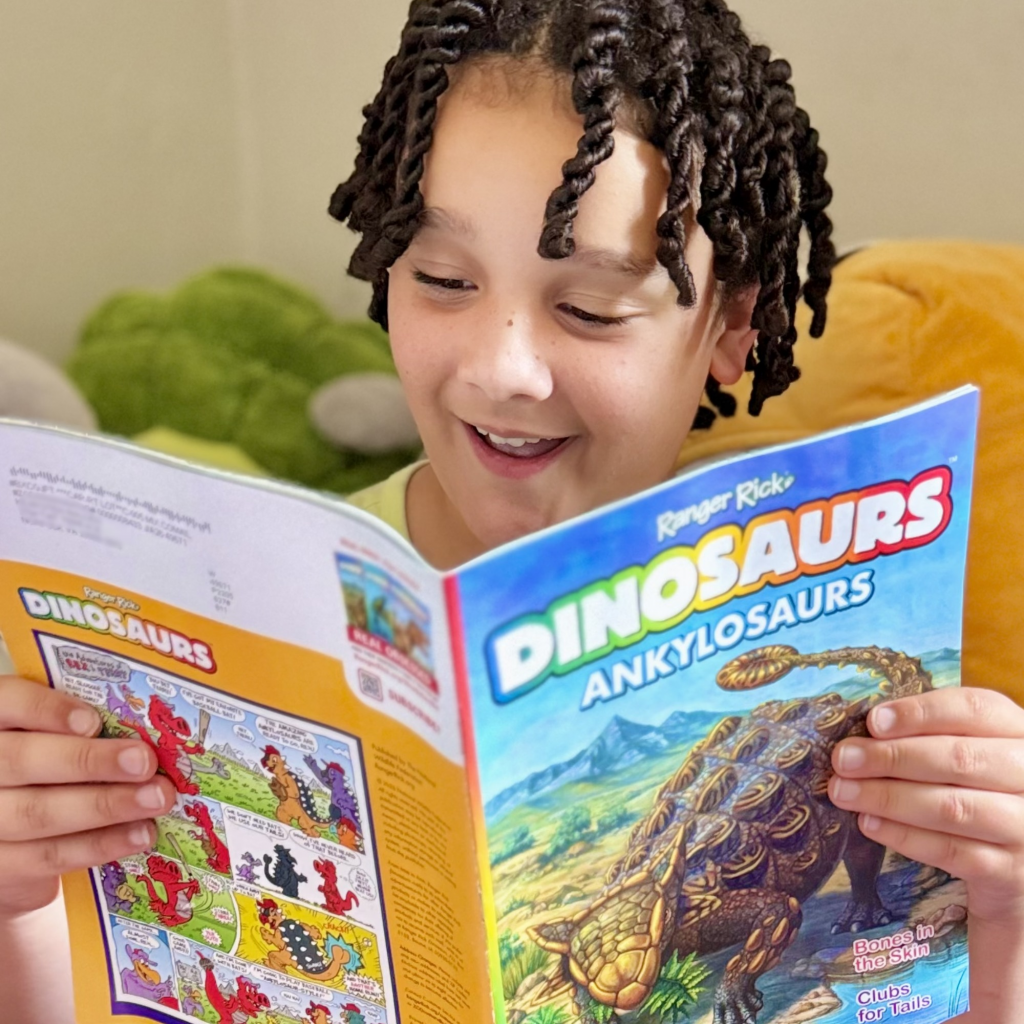
Reading level for kids is important. But it is not the only thing that matters. It should never override a child’s enthusiasm for a topic they genuinely love.
A child obsessed with dinosaurs, space, or a favorite book series will push through difficulty they would normally resist. The motivation is simply there. Interest is one of the most powerful reading tools that exists. If your child wants to read a book slightly above their level, that is often worth encouraging. Be available to help with unfamiliar words and talk through the story together.
A technically easy book that a child is wildly excited about is always better than a perfectly leveled book they have no interest in. The best reading level is the one that keeps a child reading.
Putting It All Together: Finding the Right Reading Level for Your Kid
Here is a quick summary for the next time you choose a book at the right reading level for your child:
- Try the five finger rule — open to a middle page and count unknown words. Two to three is the sweet spot for independent reading.
- Look up the Lexile score and AR level at Lexile.com or arbookfind.com and compare them to your child’s grade range.
- Watch for signs of struggle — avoidance, frustration, and poor comprehension all signal a book may be above the right reading level for kids.
- Remember that read-aloud level is higher than independent reading level. A book too hard to read alone might be perfect to read together.
- Let interest lead when possible — a motivated reader will always outperform a reluctant one, regardless of the numbers.
Finding the right reading level for kids is not an exact science. Every child is different. But with these tools in hand, you will be able to make a much more informed choice the next time you are standing in front of a bookshelf wondering where to start.