

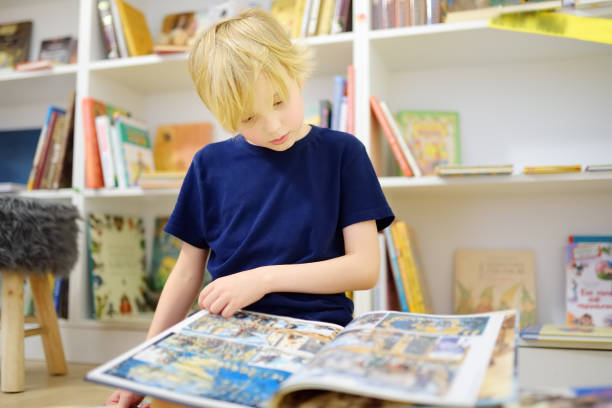
When parents think about what counts as reading for kids, the first thing that probably comes to mind is a child sitting quietly with a traditional chapter book. Maybe they’re reading a few pages before bed or working their way through a book independently. But reading can look very different from child to child, and many of the things children enjoy reading or listening to can still be valuable parts of becoming a reader.
A child might spend the afternoon reading a graphic novel, listening to an audiobook, or looking through a picture book. They might also read comics or use a reading app on a tablet. Another child may want to read the same favorite book over and over again. These experiences don’t all look the same, but they can all help children develop an interest in stories, language, vocabulary, and books.
This is especially important for children who aren’t naturally drawn to traditional books. If a comic book is what gets a child excited about reading, or an audiobook is what makes them interested in a story, I would much rather see that child engaging with books and stories than deciding that reading isn’t for them.
So, what counts as reading for kids? The answer is a lot broader than many parents realize.
What Counts as Reading for Kids?
There isn’t just one correct way for a child to read.
Traditional picture books, early readers, chapter books, nonfiction books, comics, graphic novels, magazines, ebooks, and reading apps can all give children opportunities to interact with written language. Audiobooks are a little different because the child isn’t decoding the printed words themselves, but they can still play an important role in building vocabulary, comprehension, background knowledge, and an enjoyment of stories.
The format matters less than parents sometimes think. What matters is regular exposure to language and stories. Those experiences should fit the child’s age, reading development, and interests.
That doesn’t mean every reading activity develops exactly the same skills. A child listening to an audiobook is practicing different skills from a child sounding out words in an early reader. Both experiences can still have value, particularly when they are part of a larger reading routine.
The goal shouldn’t be to find one perfect format and make children stick with it. Instead, give children opportunities to experience reading in several different ways and pay attention to what makes them want to keep coming back.
Do Comics Count as Reading for Kids?
Yes. Comics count as reading.
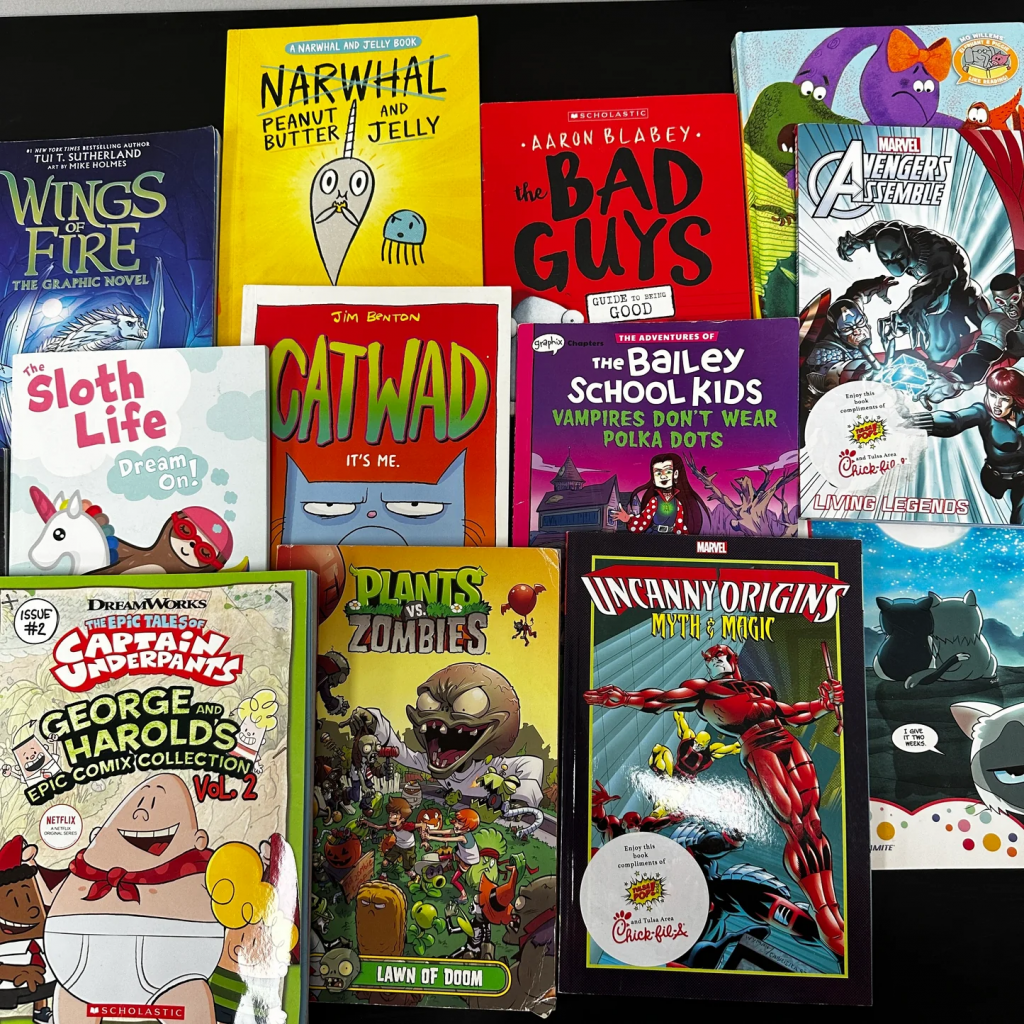
This is one of the first things I would tell a parent whose child keeps choosing comics instead of traditional books. Comics require children to follow text, understand dialogue, interpret illustrations, and connect what is happening from one panel to the next.
That combination can actually make comics a surprisingly complex reading experience. Children have to pay attention to both the words and the pictures to understand what is happening in the story.
Graphic novels work in much the same way. They are not simply “books with fewer words.” The illustrations provide information about characters, setting, emotions, action, and story progression, while the written language still carries important parts of the narrative.
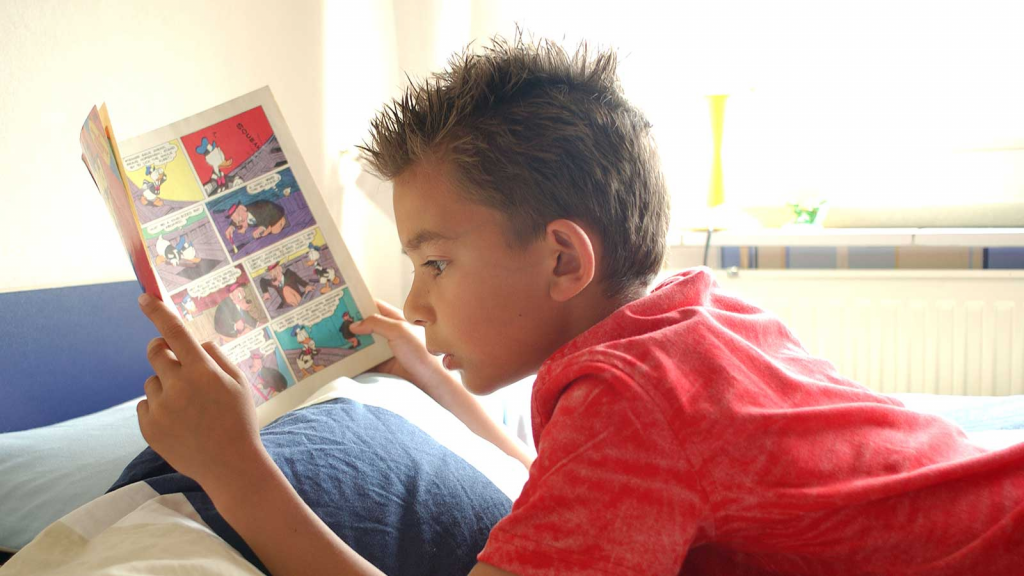
Reading Rockets’ guide to graphic novels for young kids explains that graphic novels can support vocabulary, reading confidence, stamina, and storytelling, while also describing them as legitimate books for children across different reading levels.
The American Library Association also maintains children’s graphic novel reading lists, including selections specifically intended for children ages 5–12.
So if your child keeps bringing home comics or graphic novels from the library, you don’t need to feel like they’re avoiding “real reading.”
They are reading.
Are Graphic Novels Good for Kids?
Graphic novels can be particularly useful for children who are reluctant to pick up traditional books.
The combination of illustrations and text can make longer stories feel more approachable. Children can still encounter new vocabulary, characters, plots, and ideas along the way. At the same time, graphic novels can introduce children to more complicated vocabulary, characters, plots, and themes as their reading develops.
Another benefit is that graphic novels come in far more genres than superheroes. Children can find fantasy, science fiction, history, biographies, mysteries, nonfiction, and many other types of stories in graphic novel form.
That variety makes them useful even when a child has moved beyond the earliest stages of reading. A graphic novel can be an enjoyable book in its own right rather than simply a stepping stone toward a “real” novel.
The American Library Association’s resources on graphic novels in elementary education also discusses using graphic novels for independent reading and encouraging children to read them for pleasure.
For parents wondering what counts as reading for kids, graphic novels are one of the easiest examples to start with. If your child is reading the words, following the story, and making sense of the information on the page, there is no reason to dismiss the book because of its format.
Do Audiobooks Count as Reading for Kids?
Audiobooks are a little different from comics and graphic novels because the child isn’t actually reading the printed words. However, that doesn’t make audiobooks useless for children.
Listening to a well-written story exposes children to vocabulary, sentence structure, and storytelling. It can also introduce ideas that may be beyond what they can currently read independently. It can also allow children to enjoy books that would be too difficult for them to decode on their own.
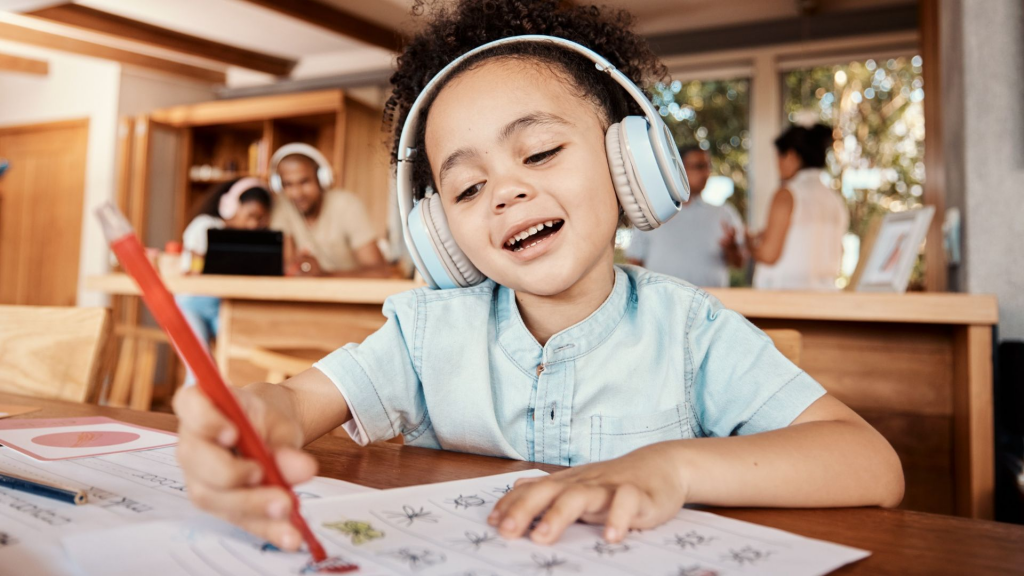
This can be especially helpful when a child loves stories but is still developing their independent reading skills. A child might listen to a chapter book with a parent or through an audiobook while continuing to practice reading simpler books independently.
Reading aloud has an important place in literacy development as well. The National Institute of Child Health and Human Development notes that reading aloud is considered an important way for caregivers to prepare children to learn to read, while effective reading instruction also involves skills such as phonics, fluency, vocabulary, and comprehension.
That distinction is worth keeping in mind. Listening to an audiobook isn’t a replacement for learning to decode written words, but it can absolutely be part of a child’s overall literacy experience.
Do Reading Apps and Ebooks Count as Reading?
They can.
A child reading an ebook on a tablet is still reading the words on the page, even though those words are displayed on a screen instead of printed on paper. The same applies to many children’s reading apps that allow children to read digital books independently.
Digital reading can be particularly useful when it gives children access to books that match their interests. Some children also enjoy features such as narration, adjustable text, animations, or the ability to quickly find another book when they finish.
Of course, not every digital reading experience is identical. Some apps focus heavily on games or interactive features. Others are primarily digital libraries containing traditional books. Parents can decide what works best for their child.
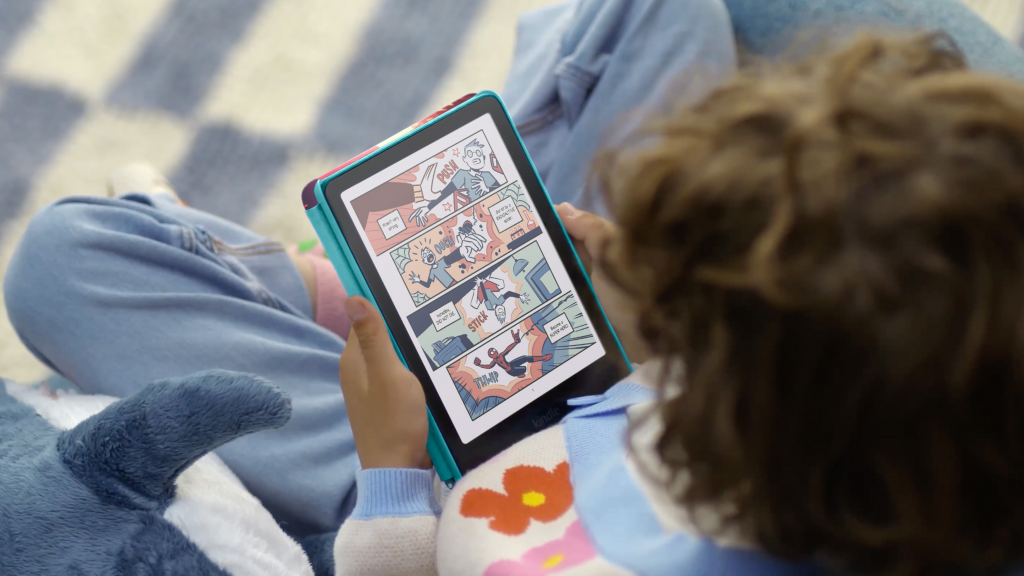
The important thing is not to assume that a child isn’t “really reading” simply because the book is on a screen.
If your child is happily reading a story on a reading app, that enthusiasm is worth encouraging.
What About Picture Books for Older Kids?
Picture books aren’t only for preschoolers.
A picture book can contain sophisticated vocabulary, complicated ideas, detailed illustrations, or themes that are appropriate for much older children. The format of the book doesn’t automatically determine the reading level or intellectual value of the story.
This is another area where thinking about what counts as reading for kids can be helpful. A child shouldn’t feel embarrassed about choosing a picture book simply because they are technically old enough to read chapter books.
Picture books can also be excellent read-alouds for families. Parents can discuss the illustrations, ask questions about the characters, make predictions, or simply enjoy the story together.
Reading doesn’t have to become less enjoyable just because a child gets older.
What About Rereading the Same Book?
Rereading counts too, and children often get more out of familiar books than parents realize.
When a child reads a story for the first time, much of their attention may be focused on figuring out what is happening. A second or third reading can give them more opportunities to notice vocabulary, details in the illustrations, character choices, or parts of the story they missed before.
Repeated reading can also help children become more familiar with the words and language in a text. For beginning readers, that familiarity can make a previously difficult book feel much more manageable.
If your child wants to read the same favorite book again, there is no need to take it away simply because they have already finished it.
Let them enjoy it.
And if you’d like to learn more about this, check out our related KidiReading article on why children read the same book over and over.
Should Kids Only Read Books at Their Reading Level?
Not necessarily.
A child’s independent reading level is useful when you’re choosing books they are expected to read on their own, but it doesn’t mean every book they encounter needs to fit neatly into that level.
A child can listen to a book that is above their independent reading ability. They can look through a picture book with a parent. They can attempt a graphic novel that is slightly challenging and ask for help when they encounter unfamiliar words.
This is one reason it helps to have a mixture of books available at home. Some should feel easy and comfortable, while others can give children opportunities to stretch their reading skills.
If you’re unsure whether a particular book is appropriate for your child’s independent reading, our guide on how to tell if a book is the right reading level for your child can help.
Why Reading for Fun Matters
One of the biggest mistakes adults can make is turning every reading experience into an assignment.
Children need opportunities to read because they genuinely want to.
If a child spends twenty minutes reading a comic about their favorite superhero, that is twenty minutes they chose to spend with a story. If another child listens to an audiobook while following along with the physical book, that is another opportunity to engage with language. A child who spends an afternoon reading about whatever they happen to love is still building a relationship with books.
Reading motivation matters because children are much more likely to keep reading when they associate books with enjoyment.
That doesn’t mean reading instruction isn’t important. Children need explicit instruction in phonics, fluency, vocabulary, and comprehension. NICHD’s overview of evidence-based reading instruction discusses these areas in detail.
But formal instruction and reading for pleasure don’t have to compete with each other.
Ideally, children get both.
How to Encourage Kids to Read More
If you want your child to read more often, start with the things they already enjoy.
A child who loves Spider-Man might be interested in superhero comics. Someone who loves animals may choose nonfiction books about wildlife. A child who spends all day talking about dinosaurs might suddenly become very interested in a book about fossils.
Don’t worry too much about whether the first book they choose is the one you would have picked for them.
Let them browse and choose the books that catch their attention. If they find a favorite, there’s nothing wrong with letting them reread it, either.
You can gradually introduce other kinds of books once reading has become something they enjoy. If your child loves graphic novels, try another graphic novel by a different author. If they enjoy audiobooks, occasionally pair one with the physical book. When they become interested in a particular subject, use that interest to introduce nonfiction.
Reading interests can grow naturally when children are given room to explore.
For more ideas, our guide on how to build a reading routine for kids that actually sticks covers some practical ways to make reading a regular part of the day.
What Counts as Reading for Kids Who Don’t Like Books?
This is where I think the broader definition of reading becomes especially important.
If a child says they don’t like reading, I wouldn’t immediately assume that they don’t like stories or books. They may simply dislike the particular type of book they’ve been given.
A child who refuses a chapter book might happily read a comic. Someone who doesn’t want to sit down with a traditional picture book might enjoy an interactive ebook. Another child may prefer listening to stories before they become interested in reading them independently.
Sometimes the format makes all the difference. A child who says “I hate reading” may feel very differently after finding a book they actually enjoy.
That is why I would rather encourage a child’s existing interests than make them feel like their favorite type of book doesn’t count.
Once a child starts enjoying reading, it becomes much easier to gradually introduce new formats, genres, vocabulary, and levels of difficulty.
Reading Doesn’t Have to Look the Same for Every Child
There is no single picture of what a reader is supposed to look like.
One child may spend every afternoon with chapter books. Another may prefer graphic novels. Someone else might listen to audiobooks in the car and read comics before bed. A younger child may want the same picture book read aloud every night for a month.
All of those children can be developing positive relationships with stories and language.
The important thing is to keep giving children opportunities to interact with books and other forms of reading while making sure they receive the instruction they need to develop their foundational reading skills.
When parents ask what counts as reading for kids, I think the most useful answer is to look at the bigger picture rather than judging a book by its format.
A comic can be a book.
A graphic novel can be a book.
An ebook can be a book.
An audiobook can be a valuable way to experience a story.
A reading app can give a child another way to explore books.
And sometimes, the best book for a child is simply the one they actually want to pick up.
Final Thoughts
So, what counts as reading for kids? More than many parents might initially think.
Children can benefit from traditional picture books, early readers, chapter books, nonfiction, comics, graphic novels, ebooks, reading apps, and audiobooks in different ways. Some formats provide direct practice with decoding and fluency, while others expose children to vocabulary, stories, background knowledge, and language that can support their overall literacy development.
The goal isn’t to make every reading experience look identical.
Instead, give children plenty of opportunities to read and listen to stories, explore different formats, and follow their interests. If a comic book gets a reluctant reader excited about picking up a book, that’s a positive thing. If an audiobook helps a child discover a series they eventually want to read independently, that’s valuable too.
And if your child wants to read the same graphic novel for the tenth time?
Let them.
The more children associate books and stories with something they genuinely enjoy, the more likely they are to keep coming back to them.
Reading should certainly help children learn. But it should also give them something they want to come back to.
FAQ: What Counts as Reading for Kids?
What counts as reading for kids?
What counts as reading for kids can include many different formats, including picture books, early readers, chapter books, nonfiction, comics, graphic novels, ebooks, and reading apps. Audiobooks are not the same as independent reading because children are listening rather than decoding printed words, but they can still support vocabulary, comprehension, background knowledge, and an enjoyment of stories.
Do comics count as reading for kids?
Yes. Comics require children to read written language while also interpreting illustrations and following the sequence of a story. Graphic novels can provide opportunities to build vocabulary, reading confidence, and comprehension while introducing children to different genres and types of storytelling.
Are graphic novels good for kids?
Graphic novels can be a great choice for children, including reluctant readers. The combination of text and illustrations can make longer stories feel more approachable while still giving children opportunities to encounter new vocabulary, characters, plots, and ideas. The American Library Association also maintains recommended graphic novel lists for children.
Do audiobooks count as reading?
Audiobooks are not the same as independently reading printed text because the child is listening rather than decoding the words. However, they can still be a valuable part of a child’s literacy experience by exposing children to vocabulary, sentence structure, stories, and ideas that may be beyond their independent reading level.
Do reading apps count as reading?
Yes. When a child is reading the words in an ebook or digital book through a reading app, they are still practicing reading even though the text appears on a screen rather than on paper. Digital books can also give children access to stories that match their interests and reading abilities.
Should kids only read traditional books?
No. Traditional books are valuable, but children can benefit from exploring different formats. Comics, graphic novels, nonfiction, ebooks, magazines, audiobooks, and reading apps can all have a place in a child’s reading life. The important thing is to make sure children also receive appropriate instruction and practice with the foundational skills they need to become independent readers.
Is reading for fun important for kids?
Yes. Reading for enjoyment can help children develop positive attitudes toward books and make reading something they want to continue doing. Giving children choices and allowing them to explore their own interests can make it easier for them to build regular reading habits.
What if my child only wants to read comics or graphic novels?
There is no need to immediately take comics or graphic novels away and replace them with traditional chapter books. Instead, use that interest as a starting point. Once a child is engaged with reading, you can gradually introduce other genres and formats that connect to the subjects and stories they already enjoy.
What if my child doesn’t like reading at all?
Start by looking at what your child actually enjoys. A child who dislikes traditional books may still enjoy comics, graphic novels, nonfiction, audiobooks, ebooks, or stories about a favorite subject or character. Finding a format that feels interesting and manageable can be a useful first step toward developing a more positive relationship with reading.


Guter Überblick. Nützlich: H3MaxAI: . H3MaxAI