

Reading comprehension tests ask kids to do more than simply read a passage. They need to understand what they read, remember important details, figure out unfamiliar words, and choose answers that are supported by the text. For many students, learning effective reading test taking strategies can make these tasks feel much more manageable.
Even children who enjoy reading can struggle with comprehension tests. Sometimes they understand the story but misread a question. Other times, they narrow their choices down to two answers and have trouble deciding which one makes the most sense. Learning how to approach these situations gives kids a process to follow instead of leaving them to rely on guesses.
The good news is that test-taking skills can be practiced. Kids can learn how to recognize question wording, eliminate incorrect answers, use context clues, and return to a passage when they need more information. These skills can help them become more thoughtful readers and more confident test-takers.
Whether your child is preparing for a classroom reading quiz, a standardized assessment, or a weekly comprehension worksheet, these ten tips can help them approach reading tests one step at a time.
Why Are Reading Test Taking Strategies Important for Kids?
Reading comprehension involves several skills working together. Children need to understand vocabulary, follow ideas across a passage, recognize important details, and make connections between what they read and what a question asks. A test adds another challenge because students must demonstrate those skills within a particular format and sometimes under time pressure. Learning reading test taking strategies can help children approach these challenges with a clearer plan and make better use of the reading skills they already have.
Without a clear strategy, a child might rush through a question, choose an answer simply because it sounds familiar, or rely on memory when the passage contains the information they need. These mistakes do not always mean the child failed to understand the reading. Sometimes they need help figuring out how to approach the question itself.
Strategies Give Kids a Process to Follow
Having a repeatable approach can make unfamiliar questions less overwhelming. A student who knows to reread the question, eliminate answers that do not fit, and look for supporting evidence has several steps to try when they feel stuck.
These habits can also encourage children to slow down and think about their choices. Rather than immediately picking an answer, they learn to ask themselves whether the text actually supports it.
Test-Taking Skills Can Reveal Areas for Improvement
Practicing reading test taking strategies can help parents and educators identify where a child needs additional support. For example, a student might consistently struggle with vocabulary questions but do well when identifying characters and events. Another student might understand the passage but overlook words such as not or except in the questions.
Recognizing these patterns makes it easier to choose the right kind of practice. A child who needs vocabulary support may benefit from more work with context clues, while a child who rushes through questions may need practice slowing down and checking their answers.
The goal is not to teach children tricks for getting through tests without understanding what they read. It is to help them use their reading skills more effectively and demonstrate what they know.
10 Reading Test Taking Strategies for Kids
The following strategies can help children approach reading comprehension questions more carefully. Some work best before answering questions, while others help students evaluate their choices or check their work.
1. Read the Entire Passage Carefully Before Answering Questions
When a reading test includes a story or informational passage, encourage your child to read it carefully before jumping into the questions. The goal is to understand what the passage is about, who or what it describes, and which details seem important.
Some students try to save time by reading the questions first and searching the passage for answers. However, research from the University of Georgia found that reading the entire passage for comprehension first tended to help students answer questions more efficiently in the study. The best approach can vary depending on the student and test, but understanding the text should remain the priority.
While reading, kids can pay attention to:
- The main topic or central idea
- Important events and details
- Characters, settings, or key people
- Problems, explanations, or changes throughout the passage
- Words or sentences that seem especially important
Reading the entire passage first is one of the foundational reading test taking strategies because it helps students understand the overall meaning before focusing on individual questions. Kids do not need to memorize every detail, since they can return to the text when a question asks for something specific.
2. Make Sure You Understand What Each Question Is Asking
Sometimes, a child understands the passage but still chooses the wrong answer because they misunderstand the question. Learning to recognize common question words can help students figure out exactly what information they need.
For example:
- Who asks about a person or character.
- Where asks about a place or setting.
- When asks about a time or event.
- Why asks for a reason or explanation.
- How asks about the way something happened or was done.
- What may ask about an event, detail, idea, or definition.
- Which statement best describes asks students to identify the answer that most accurately fits the passage.
Encourage kids to slow down and identify the important words in each question. If a question asks why a character left the house, for instance, the answer needs to explain the reason the character left, not simply describe what happened afterward.
It can also help to restate a question in simpler words before looking at the answer choices. This small habit gives students a clearer idea of what they are looking for.
3. Go Back to the Passage to Find Evidence
Students sometimes assume they should remember every answer after reading a passage once. In reality, strong readers often return to the text to check details and confirm their understanding.
Teach your child to look for evidence that supports an answer. If a question asks why a character made a particular decision, they can reread the relevant part of the story and look for clues about the character’s reasoning.
For example, imagine a passage says:
“Maya glanced at the dark clouds gathering above the playground. She quickly packed her picnic and called to her brother to help carry the food inside.”
If a question asks why Maya packed up her picnic, the dark clouds provide an important clue. The passage does not directly say that rain is coming, but the details help readers understand the likely reason.
A helpful habit is to ask, “Which part of the passage makes me think this answer is correct?” If a student cannot find any supporting evidence, they should reconsider their choice.
Returning to the passage is not a sign that a child has a poor memory. It is a useful strategy for checking answers and avoiding mistakes.
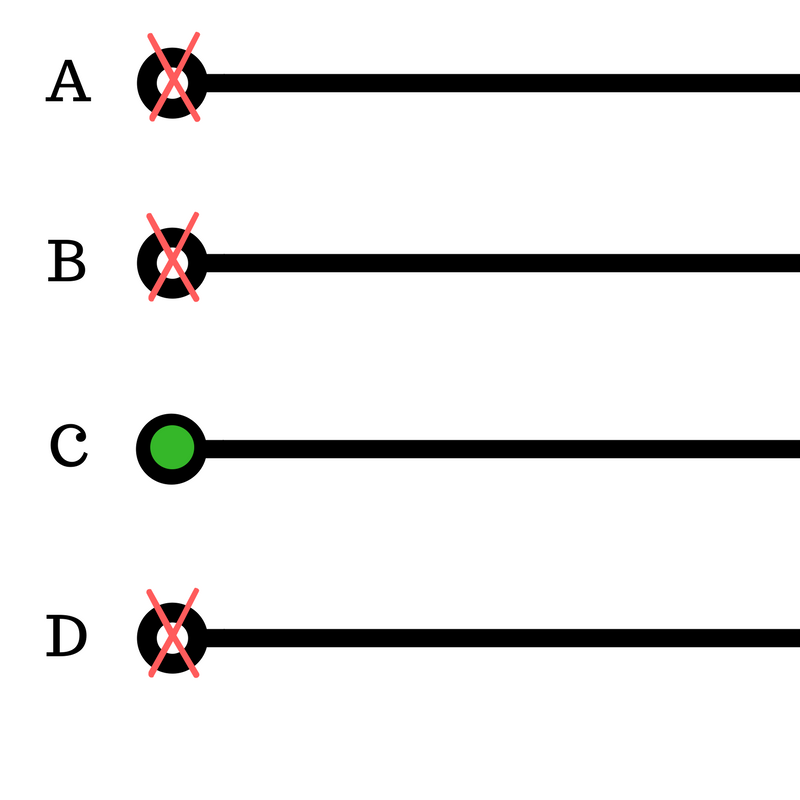
4. Use Process of Elimination to Eliminate Wrong Answers
Process of elimination is one of the most useful reading test taking strategies for multiple-choice questions. Several answer choices may sound reasonable at first, so it helps to remove the ones that clearly do not fit before choosing an answer. When practicing reading test taking strategies, encourage children to explain why each incorrect answer can be eliminated instead of simply guessing which choice looks right.
Students can work through the choices one at a time:
- Cross out answers that clearly contradict the passage.
- Remove choices that mention details unrelated to the question.
- Look carefully at the remaining answers.
- Choose the option best supported by the text.
For example, if a passage explains that a family moved to a new town because of a parent’s job, an answer saying they moved to be closer to their grandparents would be incorrect unless the passage provides that information.
Students should also be careful with answers that contain one correct detail but do not actually answer the question. An option can sound believable without being the best answer.
Process of elimination helps kids make a more thoughtful choice, especially when they are unsure between two options. Encourage them to explain why an answer is incorrect rather than crossing it out simply because it does not sound right.
5. Use Context Clues to Answer Vocabulary Questions
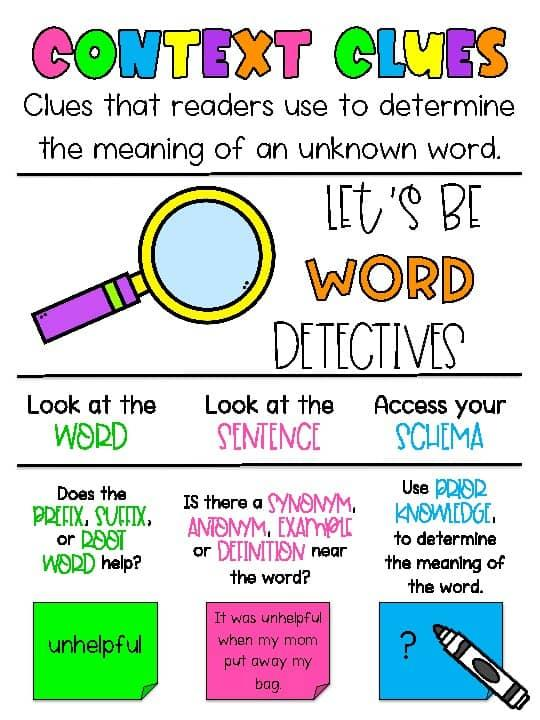
Reading tests sometimes include vocabulary words that students do not recognize. Instead of immediately giving up or guessing randomly, kids can use context clues to work out a word’s likely meaning.
Context clues are hints found in the surrounding words and sentences. These hints may include examples, descriptions, comparisons, or explanations.
Consider this sentence:
“After walking for hours beneath the hot sun, Leo felt exhausted and could barely keep his eyes open.”
Even if a student has never seen the word exhausted, the rest of the sentence suggests that Leo is extremely tired.
Here are a few questions kids can ask themselves when they encounter an unfamiliar word:
- What is happening in the sentence?
- Do the surrounding words explain or describe the unfamiliar word?
- Is an example or comparison provided?
- What meaning would make sense in this context?
Context clues do not always reveal the exact definition, but they can help students make a reasonable prediction. If the test asks what a word means in a particular sentence, kids should choose the meaning that fits the way the word is used there.
6. Watch Out for Distractors in Multiple-Choice Questions
A distractor is an incorrect answer choice designed to look possible or tempting. These answers can confuse students because they may include familiar words or details from the passage.
For example, a question might ask why a character felt nervous. One answer choice could mention something that happened to the character, but that detail might not explain the character’s feelings.
Teach students to check every answer against the actual question. They should not select an option just because it contains a word they remember reading.
It is also important to read each answer choice completely. Words such as always, never, only, or everyone can make a statement too broad to be supported by the passage.
Before choosing an answer, students can ask themselves:
- Does this answer actually respond to the question?
- Is it supported by the passage?
- Does it add information that the passage never gives?
- Is another answer more accurate or complete?
The goal is not to assume every answer is a trick. It is to make sure the chosen answer fits both the question and the text.
7. Distinguish the Main Idea From Supporting Details
Reading comprehension tests frequently ask about the main idea of a passage. This can be confusing for kids who focus on one interesting detail instead of thinking about the passage as a whole.
The main idea is the central point the author wants readers to understand. Supporting details provide examples, facts, descriptions, or explanations that help develop that point.
Imagine a passage describing how bees help flowers grow by carrying pollen from one flower to another. It might also explain where bees live and what they eat. Those details are useful, but the main idea may be that bees play an important role in helping many plants reproduce.
To identify the main idea, encourage kids to ask:
- What is this passage mostly about?
- What point do several of the sentences help explain?
- If I had to summarize the passage in one sentence, what would I say?
Students should avoid choosing an answer that focuses on just one small detail when the question asks about the entire passage.
For more ways to build this skill, explore our guide to reading comprehension questions for kids.
8. Make Inferences Using Evidence From the Passage
Some reading questions ask students to figure out something the author does not state directly. These questions require an inference, which means using clues from the text together with what the reader already knows.
For example, a passage might say:
“Oliver opened his umbrella as he stepped outside. Puddles covered the sidewalk, and water dripped from the roof.”
The passage never directly says that it is raining or has recently rained. However, the umbrella, puddles, and dripping water provide clues that help the reader reach that conclusion.
When answering inference questions, students should look for details that work together rather than relying entirely on their own opinions or experiences.
A few useful questions to ask are:
- What clues does the author give me?
- What do these clues suggest?
- Does my answer make sense based on the information in the passage?
- Am I making a reasonable inference, or am I simply guessing?
There may be more than one possible explanation in real life, but reading tests generally expect the inference best supported by the available evidence.
9. Manage Your Time During Reading Tests
Time management is another important part of reading test taking strategies, especially when students have several passages and questions to complete. Children may feel pressured to finish quickly when they notice classmates moving ahead, but rushing can lead to missed details and careless mistakes.
Help your child practice working at a steady pace. They should spend enough time reading carefully and thinking through each answer without getting stuck on a single difficult question.
If a question feels especially challenging, students can:
- Eliminate any answers they know are incorrect.
- Mark the question to revisit later, if the test allows it.
- Move on to questions they can answer more confidently.
- Return to the harder question when time permits.
It is also useful to practice with short passages and a reasonable time limit at home. This helps children get comfortable with the pace of a test without turning every reading activity into a stressful race.
Remind your child that finishing first is not the goal. Understanding the passage and answering as accurately as possible are more important than rushing through the questions.
10. Check Answers Before Submitting the Test
If time remains, students should use it to review their work. Even a quick final check can help them catch mistakes they might otherwise miss.
Encourage kids to revisit questions they were unsure about, reread confusing wording, and confirm that their answers match the passage.
During a final review, they can ask themselves:
- Did I answer every question?
- Did I choose an answer that directly responds to what was asked?
- Can I find evidence for my answer in the passage?
- Did I accidentally overlook a word such as not or except?
- Does my answer make sense when I read the question and answer together?
Students should not change an answer simply because they suddenly feel nervous about it. They should make a change when they notice evidence that their original choice was incorrect or find a stronger answer.
Over time, these review habits can help children become more careful and independent readers.
How Test-Taking Strategies Help Build Stronger Readers
Although these strategies are useful during exams, their benefits extend beyond the classroom test. Many of the skills children practice while answering comprehension questions are the same skills they need to understand books, follow instructions, learn new information, and think critically about what they read.
Children Learn to Support Their Thinking With Evidence using
When students learn to return to a passage and find evidence, they begin to understand that a good answer needs more than a guess or a personal opinion. They can explain what in the text helped them reach a conclusion.
This habit is valuable during classroom discussions, written reading responses, and everyday conversations about books. It also helps children distinguish between what a text actually says and what they think might be true.
Vocabulary and Inference Skills Improve Reading Comprehension
Using context clues encourages children to think about how words work within sentences. Making inferences helps them connect details and recognize information that an author implies rather than directly states.
These skills can make reading more rewarding because children become better at understanding unfamiliar material without needing every word or idea explained to them.

Students Become More Independent with Test Taking Strategies
When children have several strategies they can try on their own, they may become less dependent on adults to tell them what to do whenever a question gets difficult. They can reread, look for clues, eliminate choices, and check their reasoning before asking for help.
Of course, independence develops gradually. Younger readers may need modeling and reminders before these habits become familiar. The goal is to give them useful tools and plenty of opportunities to practice.
How Parents Can Practice Reading Test Taking Strategies at Home
Kids do not need to wait for a big exam to practice test-taking skills. Short, low-pressure reading activities at home can help them become more comfortable with comprehension questions and learn how to explain their answers. Practicing reading test taking strategies at home gives children a chance to build these habits in a familiar setting before they need to use them during a classroom assessment.
Practice Reading Test Taking Strategies With a Short Reading Passage
Try reading a short story, nonfiction passage, or chapter together. Ask a few questions afterward and encourage your child to show you where they found the answers.
You can use questions such as:
- What was the passage mostly about?
- Why did a character make a particular decision?
- What clues help you understand this unfamiliar word?
- What do you think might happen next, and why?
- Which detail from the passage supports your answer?
These questions practice the same skills children encounter on reading assessments without requiring a formal worksheet every time.
Practice Example: Finding Clues in a Passage
Passage:
Nora spent Saturday morning helping her grandfather in the community garden. She pulled weeds, watered the tomato plants, and collected the ripe vegetables. Before they finished, Nora noticed dark clouds gathering overhead. She helped put away the gardening tools so they could head inside.
Question: Why did Nora help put away the gardening tools?
A. She wanted to plant more tomatoes.
B. Her grandfather told her to stop gardening forever.
C. Dark clouds were gathering overhead.
D. She had forgotten how to water the plants.
Correct answer: C. Dark clouds were gathering overhead.
The passage does not directly say that it was about to rain, but the dark clouds suggest that the weather might change. Choice C is the best answer because it is supported by a clue in the text. The other choices either introduce information that is not in the passage or do not explain why Nora put the tools away.
After answering, ask your child to explain why choice C makes the most sense. Having them explain their thinking is just as important as identifying the correct letter.
Help Kids Learn From Incorrect Answers using Reading Test Taking Strategies
When a child chooses the wrong answer, try to treat it as a chance to understand their thinking rather than simply marking it incorrect and moving on.
Ask questions such as, “Which part of the passage made you choose that answer?” or “Can we find a sentence that helps us decide?” This gives your child an opportunity to reconsider the choice and notice information they may have missed.
You can also help them identify the type of mistake they made. Did they misunderstand the question? Choose a detail that was true but unrelated? Overlook a context clue? Each situation offers a different lesson for next time.
For more ideas, read our guide to helping kids with reading assignments.
Make Reading Practice and Test Taking Strategies Part of the Routine
Regular reading gives children more opportunities to practice comprehension skills in different contexts. You can read together, discuss a library book, or ask questions about an informational text that interests your child.
Digital reading platforms such as Epic! can also give children opportunities to explore different books and build regular reading habits. As kids read, parents and educators can pause to discuss important details, ask questions, and encourage children to explain their thinking.
For educators and families looking for additional guidance on teaching comprehension, the Institute of Education Sciences’ K–3 reading comprehension toolkit offers research-based resources and instructional ideas.
The most helpful practice does not need to be complicated. Even a few minutes spent discussing a story and looking for evidence can help children strengthen the skills they will use on reading tests.

Using Reading Test Taking Strategies to Build Test Confidence
Some children find reading tests challenging not only because of the questions, but also because they feel nervous about getting an answer wrong. They may rush, second-guess themselves, or become discouraged when they encounter an unfamiliar word.
Helping children build confidence does not mean promising that every test will be easy. Instead, it means showing them that they have strategies to use when something feels difficult.
Focus on What Kids Can Control when doing Test Taking Strategies
Encourage your child to focus on the next step they can take. They may not know an answer immediately, but they can reread the question, look for clues, and eliminate choices that do not fit.
This shifts the focus away from needing to know everything right away and toward working through a problem carefully.
Practice Without Adding Unnecessary Pressure for Reading Test Taking Strategies
Not every reading activity needs to feel like a test. Sometimes, reading together and discussing a few questions is more useful than completing a long worksheet under a strict time limit.
As children become more comfortable with the strategies, you can gradually introduce practice questions that resemble the formats they will see at school. Keep the emphasis on learning how to approach questions, not on getting every answer right on the first try.
Recognize Progress, Not Just Correct Answers
Notice when your child uses a helpful strategy, even if they do not immediately arrive at the right answer. Perhaps they returned to the passage, explained their reasoning, or recognized that one choice did not have enough evidence to support it.
Recognizing these efforts can help children understand that improvement comes from practicing useful habits over time. With support and repetition, many students become more comfortable tackling challenging questions independently.

Final Thoughts
Learning effective reading test taking strategies is about more than choosing the right multiple-choice answer. Kids need to understand what they read, recognize what questions are asking, find evidence, and think carefully about the information in front of them.
With regular practice, students can become more comfortable using context clues, eliminating incorrect answers, making inferences, and checking their work. These skills can support them during classroom tests, standardized assessments, and everyday reading activities.
Parents and educators can help by modeling these strategies, practicing with short passages, and discussing both correct and incorrect answers in a supportive way. Children do not need to master everything at once. Each opportunity to slow down, look for evidence, and explain their thinking helps them build stronger reading habits.
Most importantly, remind children that a difficult question is something they can work through one step at a time. The goal is not simply to finish a test, but to develop the reading skills and confidence they can carry into future learning.
Frequently Asked Questions (FAQ)
What are the best reading test taking strategies for kids?
Helpful strategies include reading the passage carefully, identifying what each question asks, finding evidence in the text, using context clues, eliminating incorrect answer choices, and checking answers before submitting the test. Practicing these skills regularly can help kids approach reading comprehension questions more confidently.
Should kids read the passage or the questions first?
For many elementary reading comprehension tests, reading the entire passage first can help students understand the text before looking for specific answers. Research from the University of Georgia found that this approach tended to help students answer more efficiently in the study. However, the most useful approach can depend on the student, the passage, and the test format.
How can I help my child get better at reading comprehension tests?
Practice with short passages and discuss the questions together. Ask your child to explain why an answer makes sense and find the sentence or detail that supports it. Focus on understanding and reasoning rather than simply completing as many questions as possible.
How can kids answer reading questions when they do not know a word?
Encourage them to use context clues by examining the surrounding sentence and looking for examples, descriptions, or other hints. They can make an educated guess about the word’s meaning and check whether that meaning fits the passage.
What should kids do when they are stuck on a reading test question?
They can reread the question, return to the relevant part of the passage, and eliminate answer choices that do not fit. If the test allows students to skip questions and return to them later, they can move on temporarily and revisit the difficult question after answering others.
How can parents help kids prepare for reading tests without making them feel stressed?
Keep practice sessions manageable and focus on the strategies children use rather than expecting every answer to be correct. Reading together, discussing short passages, and reviewing mistakes calmly can help children build skills without making reading feel like a constant assessment.