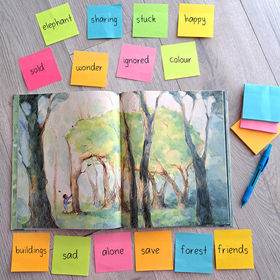

Not every great story needs words on the page. Wordless picture books use illustrations to bring characters, adventures, and imaginative worlds to life, giving children a chance to explore stories in their own way.
Kids can look closely at the illustrations, figure out what the characters might be thinking, predict what could happen next, and tell the story in their own words. They can even come up with different versions of the same story!
These books can be especially useful for younger children who are still learning to read, children who are building their English vocabulary, and readers who enjoy looking at pictures and making up their own stories.
If you’re looking for a new way to make reading time more interactive, here are 10 wordless picture books worth exploring with your child.
What Are Wordless Picture Books?
Wordless picture books tell their stories primarily through illustrations rather than written sentences. Some contain absolutely no words, while others include a handful of words or small amounts of text.
Instead of following a written description, readers use the pictures to understand what’s happening. They look at facial expressions, body language, changes in the setting, and the order of events to work out the story.
This makes wordless picture books different from books that simply have lots of illustrations. The pictures aren’t just there to decorate the pages. They’re doing the storytelling.
According to Scholastic’s guide to reading without words, these books can give children opportunities to practice storytelling and pay closer attention to the way illustrations communicate meaning.
And here’s the nice part: there isn’t always one perfect way to tell the story. Two children can look at the same page and notice different details, leading to two slightly different interpretations.
10 Wordless Picture Books for Kids
The following books offer a mix of imaginative adventures, funny situations, and stories about everyday experiences. Some are completely wordless, while others are nearly wordless. I’ve included a range of styles so families can find something that fits their child’s interests.

1. Journey by Aaron Becker
Best for: Kids who love fantasy and imaginative adventures
In Journey, a lonely girl draws a magical door on her bedroom wall and steps into an extraordinary world. Using her red marker, she creates things that help her explore, including a boat, a balloon, and a flying carpet.
The illustrations carry the story from beginning to end, letting readers follow the girl’s adventure and work out what’s happening without written narration.
One of the best things about this book is how much there is to notice. Children can make predictions, look for clues, and wonder what the girl will draw or discover next.
It’s also a good choice for encouraging creative storytelling. After reading, ask your child what they would draw if they could create a door to another world.
You can find the book on the Candlewick Press website.
2. Flotsam by David Wiesner
Best for: Curious kids who love mysteries and unusual discoveries
A boy visiting the beach discovers an old underwater camera washed up on the shore. When he develops the film, the photographs reveal a series of strange and imaginative underwater scenes.
Flotsam is a great example of how illustrations can tell a detailed story without needing paragraphs of text. Readers can examine each picture, look for unusual details, and try to figure out how the different discoveries connect.
This is a particularly good book for children who enjoy asking questions. What’s real? What’s imaginary? What might happen next?
Encourage your child to explain which picture surprised them most and what they think the camera’s photographs might mean.
3. Tuesday by David Wiesner
Best for: Kids who enjoy silly, unexpected stories
What happens when frogs start flying through the night? That’s the unusual premise behind Tuesday, a playful story filled with unexpected scenes and humorous details.
Although it’s often grouped with wordless picture books, Tuesday includes a very small amount of text. The illustrations still do most of the storytelling, making it a great option for children who are ready to pay attention to the details in each scene.
The book is especially fun for practicing prediction. Children can study what the frogs are doing, guess what might happen next, and look for clues about how the story changes from one page to another.
You can also ask your child to invent a new title for the book based on what they think the story is about.
4. Chalk by Bill Thomson
Best for: Kids who love art, adventure, and a little bit of magic
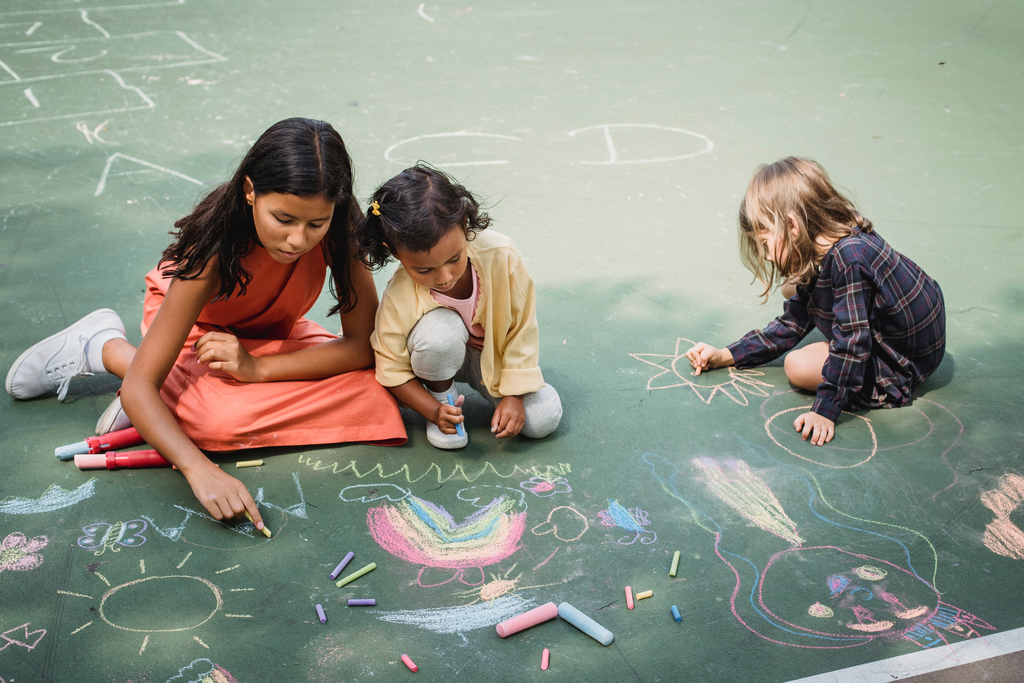
In Chalk, three children discover a bag of chalk that brings their drawings to life. What starts as an exciting discovery becomes a much bigger adventure when one of their creations causes trouble.
The illustrations make it easy for children to follow the action, even if they aren’t confident independent readers yet.
This book also offers a fun connection between reading and drawing. After looking through the story, invite your child to draw something magical and explain what happens when their creation comes to life.
You can use the activity to practice sequencing, too. Ask what happened first, what went wrong, and how the characters responded.
5. The Lion & the Mouse by Jerry Pinkney
Best for: Kids who enjoy animal stories and meaningful lessons
Jerry Pinkney’s wordless retelling of Aesop’s classic fable follows a lion and a small mouse whose lives become connected in an unexpected way.
The story is told through detailed illustrations that show the characters’ actions, expressions, and changing circumstances. Children can follow the events and discuss the message without needing to read the text.
It’s also a useful book for talking about character motivations. Why does the mouse help the lion? Can a small character make a big difference? What does the story suggest about kindness and helping others?
Younger children can focus on describing the animals and what happens in each scene, while older children can explore the lesson behind the story.
6. Mirror by Jeannie Baker
Best for: Kids who enjoy observing details and comparing different experiences
Mirror presents the daily lives of two boys growing up in different parts of the world. The book uses parallel visual stories to show their routines, families, surroundings, and experiences.
Rather than explaining the similarities and differences in words, the illustrations invite readers to notice them for themselves.
This makes the book a good choice for children who enjoy looking carefully at pictures and talking about what they see. You can ask your child what seems different between the two boys’ lives and what seems familiar.
It’s also an opportunity to discuss how people can live in different places and still share many everyday experiences.
Because the illustrations contain so much information, take your time with this one. There’s no need to rush through the pages.
7. Wave by Suzy Lee
Best for: Kids who enjoy stories about everyday experiences
In Wave, a young girl visits the beach and plays near the water. The story follows her changing feelings and reactions as she interacts with the waves.
The illustrations use movement, expressions, and visual contrast to communicate what the girl is experiencing. Children can follow her adventure without needing written explanations of her thoughts.
This is a good book for talking about emotions. How does the girl feel when she first sees the water? Does her reaction change as she gets closer to the waves?
You can also ask your child to imagine what the girl might be saying to herself throughout the story. This gives them a chance to add dialogue and build a more detailed narrative from the pictures.
8. The Red Book by Barbara Lehman
Best for: Kids who enjoy magical stories and making connections
In The Red Book, a girl discovers a mysterious red book that leads her into an unexpected adventure. The story connects different characters and places through its illustrations, encouraging readers to look for clues about how the events fit together.
Because the story doesn’t explain everything directly, children have to make observations and draw their own conclusions.
This makes it a useful choice for practicing inference. Ask your child what they think a character knows, what might happen next, and which details helped them reach that conclusion.
Older children may also enjoy revisiting the book to notice connections they missed the first time.
9. A Ball for Daisy by Chris Raschka
Best for: Younger children and kids learning to talk about emotions
Daisy is a dog who loves her ball. When something happens to it during play, she has to deal with disappointment before an unexpected new friendship changes her day.
The expressive illustrations make Daisy’s feelings easy to follow, even without written dialogue. Children can study her body language and facial expressions to work out how she’s feeling at different points in the story.
This makes the book a natural starting point for conversations about emotions, friendship, and handling disappointment.
Try asking your child how they think Daisy feels on each page. Then invite them to explain what clues in the pictures helped them decide.
It’s a simple way to encourage children to connect visual details with language.
10. The Snowman by Raymond Briggs
Best for: Kids who enjoy gentle, imaginative adventures
The Snowman follows a young boy whose snowman comes to life, leading to a magical adventure.
The story unfolds through illustrations rather than conventional written narration. Children can follow the characters’ movements and expressions, imagining the conversations and thoughts that might accompany each scene.
The book is also a good opportunity to talk about the beginning, middle, and end of a story. What changes when the snowman comes to life? What do the characters do together? How does the adventure conclude?
Although it is often associated with winter, the story’s imaginative approach makes it worth considering whenever your child wants a quiet, visual storytelling experience.
How Wordless Picture Books Help Children Build Storytelling Skills
Wordless picture books aren’t just a fun alternative to books with text. They also give children opportunities to practice several skills that support reading and communication.
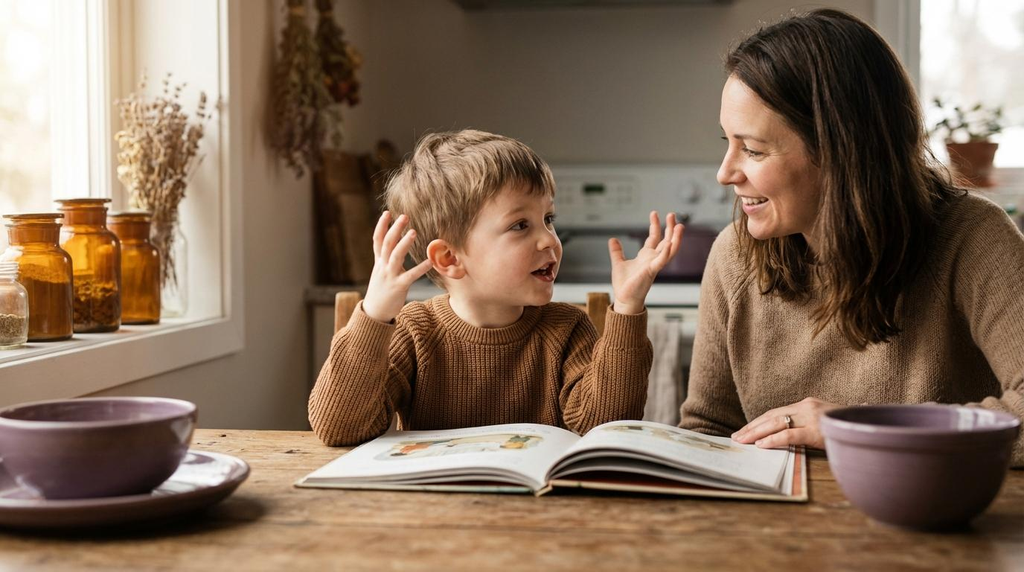
They encourage children to use their own words
When a book doesn’t provide written sentences, children can describe what they see in their own way. One child might tell a short, simple story, while another might invent dialogue, add details about the characters, or explain what they think happened between two pages.
Both approaches give children a chance to practice expressing their ideas.
They help children make predictions and inferences
Children need to look for clues in the illustrations to understand what’s happening. A character’s expression, an object in the background, or a change from one page to the next can help them figure out what’s going on.
These observations can lead to questions such as, “Why do you think the character did that?” or “What do you think will happen next?”
For more ways to support understanding during reading, see our guide on why a child can read but doesn’t understand what they read.
They give children a chance to build vocabulary
Looking at a picture can give children something concrete to describe. They might practice words related to movement, emotions, size, location, or the way characters interact.
Instead of immediately supplying a word, try asking your child to describe what they notice. You can introduce a new word when it helps them express an idea more clearly.
They make storytelling more accessible
A child doesn’t need to decode every printed word to participate in a wordless story. This can make the experience more accessible to children who are still learning to read, children developing English language skills, and children who feel more comfortable expressing ideas aloud.
It also gives adults a chance to listen to how children organize events and communicate what they think is happening.
5 Simple Activities to Try With Wordless Picture Books
You don’t need a complicated lesson plan to get more out of these books. A few simple questions and activities can turn storytime into an opportunity for children to practice storytelling.
1. Tell the story together. Take turns describing what happens on each page. You can start with a sentence, then let your child add the next part.
2. Make up character dialogue. Ask what the characters might be saying or thinking. Encourage your child to use different words and expressions to bring the characters to life.
3. Predict what happens next. Pause before turning a page and ask your child to guess what might happen. Then look at the next illustration together and compare the prediction with what actually happens.
4. Change the ending. Once you’ve finished the book, ask your child to invent a different ending. They can tell you their idea, draw it, or act it out.
5. Create a new story. Invite your child to choose three interesting details from the illustrations and use them to invent a new story. It doesn’t have to match the original book at all.
The main goal isn’t to get every detail right. It’s to give children opportunities to observe, imagine, and explain their ideas.
Can Digital Books Help With Storytelling Too?
Absolutely. Wordless picture books are a particularly useful way to encourage children to tell stories, but the same habit of looking closely at illustrations can be used with many other types of books.
For example, you can explore a picture book together, pause to discuss what the characters might be thinking, and ask your child to predict what happens next before reading the text.
Digital reading platforms such as Epic offer another way to explore illustrated children’s books together. Parents and educators can use the books available on the platform as opportunities to discuss characters, settings, and story events, while choosing titles that suit the child’s interests and reading needs.
The important part is the interaction. Whether you’re using a printed book from the library or an illustrated digital book, children benefit from having time to look closely, ask questions, and explain what they notice.
Final Thoughts
Wordless picture books remind us that reading isn’t only about saying the words on a page. It’s also about noticing details, making connections, understanding characters, and figuring out how a story fits together.
Whether your child is just beginning to explore books or is already a confident reader, these stories can offer a different way to enjoy reading together. Start with a book that matches your child’s interests, take your time with the illustrations, and give them plenty of room to share their ideas.
You might be surprised by the stories they come up with when the pictures do the talking.
Frequently Asked Questions
Are wordless picture books good for children who are learning to read?
Yes. Wordless picture books let children participate in storytelling without needing to decode every word on the page. They can practice describing events, recognizing emotions, sequencing actions, and expressing ideas. These activities can complement, rather than replace, reading books with written text.
What age is best for wordless picture books?
Many wordless picture books work well for preschool and early elementary ages, but older children can enjoy them too. The best choice depends on the complexity of the illustrations, the subject matter, and the child’s interests. Some books also invite deeper discussion about symbolism, inference, and character motivation.
How should I read a wordless picture book with my child?
Start by looking at the illustrations together. Ask open-ended questions such as “What do you notice?” or “What do you think is happening here?” Give your child time to respond, and let them tell the story in their own words. You don’t need to explain every picture or correct every interpretation.
Do wordless picture books help with vocabulary?
They can provide opportunities to practice vocabulary because children describe what they see, explain character actions, and put events into words. Adults can help by introducing useful words naturally and encouraging children to try them in their own sentences.
Can wordless picture books help children learning English?
They can be helpful because the illustrations provide context for discussing actions, objects, feelings, and events. Children can participate in storytelling even when they don’t know every English word. Adults can model useful vocabulary and sentence structures while allowing children to communicate at their own level.