
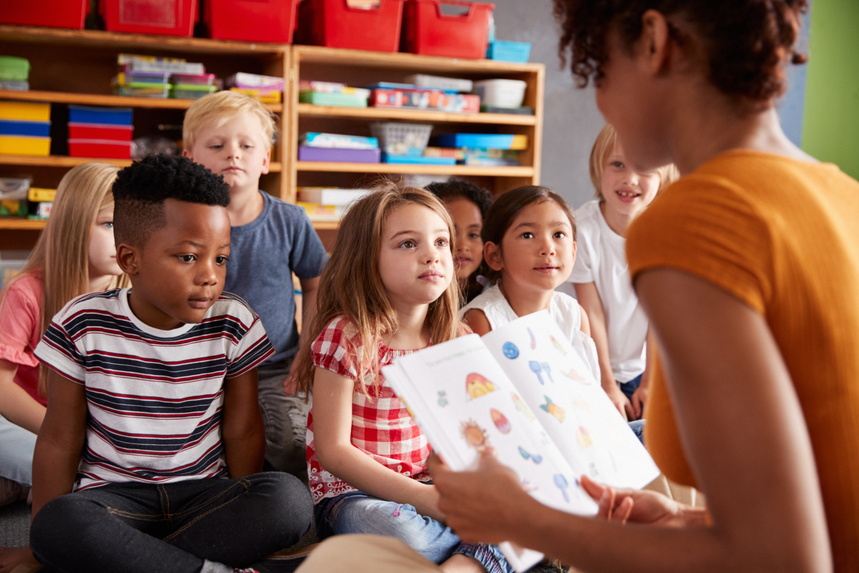
Children spend a lot of time learning how to be part of a classroom community. From listening to their teachers and following directions to sharing supplies and taking turns, there are plenty of new expectations to understand. The right classroom behavior books can help children recognize how their choices affect others and practice the social skills they need to participate in a positive learning environment.
However, learning classroom behavior isn’t just about memorizing rules or being quiet. Children also need opportunities to understand personal space, communicate respectfully, work through disagreements, and recognize when someone else needs their attention. Picture books can introduce these situations in a familiar, approachable way.
In this article, we’ve gathered 15 books about classroom behavior for children, including funny stories about interrupting, listening, sharing, following directions, and getting along with classmates. Parents and teachers can use these books as read-alouds, conversation starters, or introductions to important classroom expectations.
Why Read Books About Classroom Behavior?
Starting school and learning classroom routines can be a big adjustment, especially for younger children. Even students who understand basic rules may need practice applying them in different situations. For example, knowing that they should listen is one thing, but remembering to wait while a classmate is speaking can be more challenging.
Children can also benefit from reading stories about emotions and relationships. Our guide to the best books about feelings for kids explores another way picture books can help children understand their feelings and reactions.
Fortunately, stories give children a chance to see these situations through characters they recognize and understand. Instead of simply being told what to do, children can observe what happens when a character interrupts, ignores directions, or has trouble sharing.
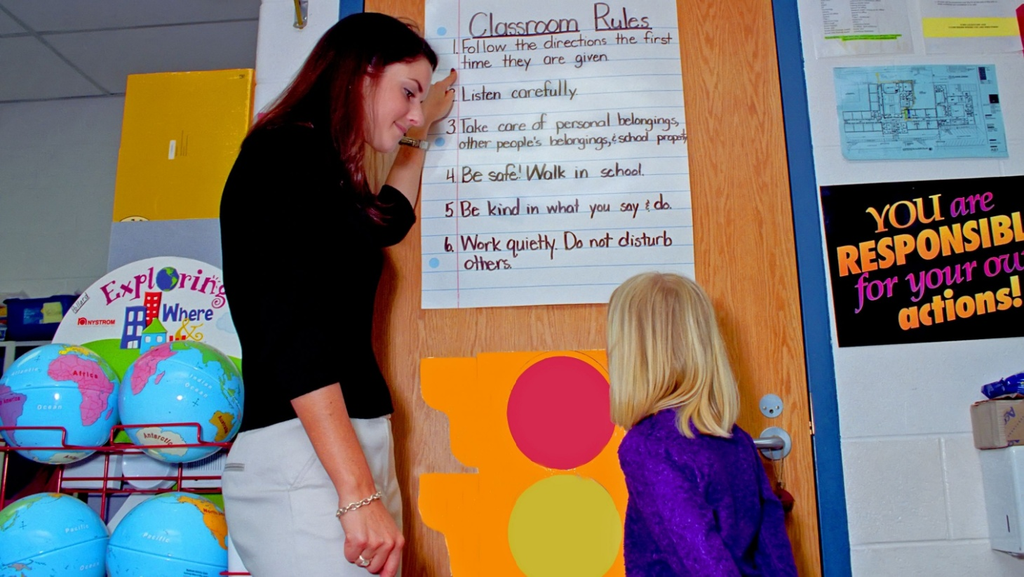
Reading classroom behavior books can help children:
- Understand classroom expectations: Stories introduce common rules, routines, and responsibilities in an accessible way.
- Develop listening skills: Children can learn why paying attention and waiting for their turn to speak are important.
- Practice positive communication: Books can demonstrate how to express thoughts, disagree respectfully, and solve problems.
- Build cooperation: Stories about sharing and teamwork show how children can work together toward a common goal.
- Recognize personal boundaries: Characters can help introduce ideas such as respecting personal space and other people’s belongings.
- Think about their choices: Children can discuss how different actions affect classmates, teachers, and the classroom community.
Most importantly, these conversations should help children understand and practice skills rather than make them feel ashamed of mistakes. Everyone is still learning, and stories can make those lessons easier to discuss.
Likewise, books about friendship for kids can help children learn about cooperation, resolving disagreements, and building positive relationships with their classmates.
15 Best Books About Classroom Behavior for Kids
The following classroom behavior books cover a variety of everyday situations, from following directions and listening carefully to sharing, respecting others, and working as a team. Some focus directly on school routines, while others explore social skills that children can use both in the classroom and beyond.
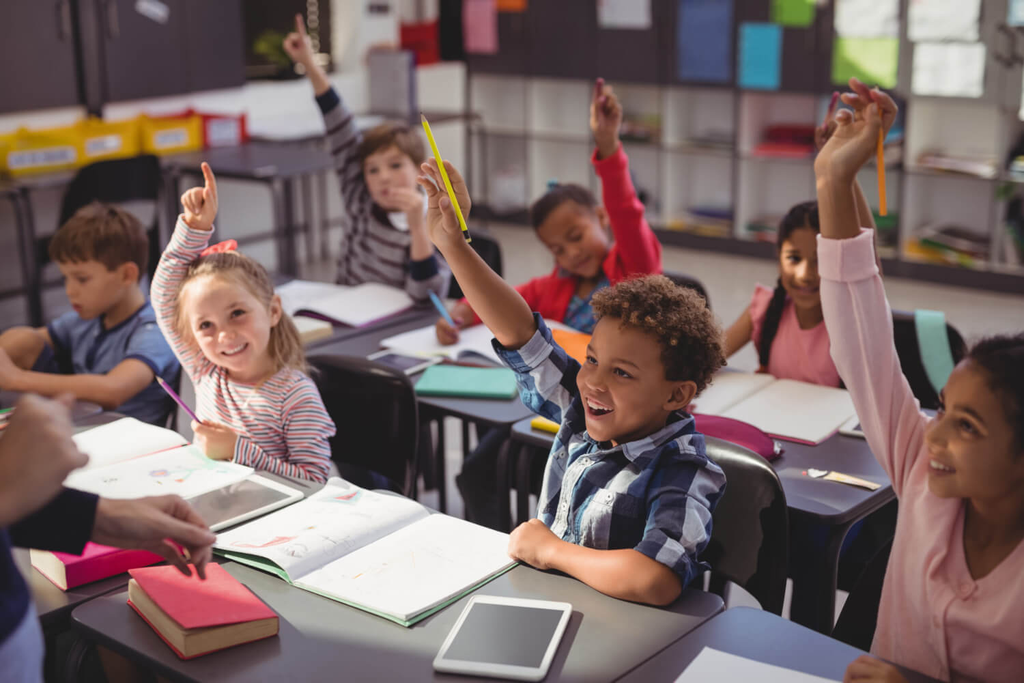
1. David Goes to School by David Shannon
David has plenty of energy, but following classroom rules isn’t always easy for him. From running in the halls to interrupting lessons, his school day is filled with amusing mistakes that keep his teacher busy.
David’s exaggerated behavior makes this book a fun introduction to classroom expectations. Children can identify the choices that cause problems and discuss what David could do differently. In addition, the humorous illustrations give readers plenty of opportunities to notice details and talk about what is happening in each scene.
Classroom skills: Following rules, respecting classroom routines, and recognizing how behavior affects others.
2. The Way I Act by Steve Metzger
The Way I Act introduces children to different character traits and the choices they can make in everyday situations. Through colorful illustrations and friendly verses, the book explores ideas such as curiosity, responsibility, persistence, and getting along with others.
Rather than focusing on a single classroom rule, this book gives children a broader opportunity to think about how they behave in different situations. Parents and teachers can use its examples to discuss what responsible and considerate choices look like at school.
Classroom skills: Responsibility, positive choices, cooperation, and self-awareness.
View the book at Chicago Review Press
3. Howard B. Wigglebottom Learns to Listen by Howard Binkow and Reverend Ana
Howard B. Wigglebottom is a rabbit who has trouble listening. His poor listening habits lead to problems at school and with the people around him. Eventually, he begins to understand how paying attention can make a difference.
This story offers a straightforward way to introduce active listening to younger children. Teachers can also use it to discuss what good listening looks like during lessons, group activities, and conversations with classmates.
The We Do Listen Foundation also provides free educational materials and activities connected to the book, making it especially useful for classroom discussions.
Classroom skills: Active listening, paying attention, and following classroom expectations.
View the book and free learning resources at We Do Listen
4. My Mouth Is a Volcano! by Julia Cook
Louis has a difficult time keeping his thoughts to himself. Whenever he has something to say, his words seem to erupt before someone else has finished speaking. However, when Louis experiences what it feels like to be interrupted, he begins to understand why listening and waiting for his turn matter.
This humorous story is particularly useful for children who frequently interrupt during lessons or conversations. It also provides an opportunity to talk about what children can do when they are excited to share an idea but someone else is still speaking.
Classroom skills: Taking turns speaking, listening, impulse control, and respectful communication.
View the book at the National Center for Youth Issues
5. Decibella and Her 6-Inch Voice by Julia Cook
Decibella loves to talk, but she doesn’t always recognize how loud her voice is. Whether she’s answering a question in class or talking somewhere quieter, she tends to use the same volume for every situation.
With help from her teacher, Decibella learns about different voice levels and when to use them. This is a helpful story for introducing the idea that different classroom activities and environments call for different speaking volumes.
For example, children can discuss the difference between a voice used during partner work, a classroom presentation, and quiet reading time.
Classroom skills: Appropriate voice volume, classroom awareness, and communication.
View the book at Boys Town Press
6. Interrupting Chicken by David Ezra Stein
The little red chicken is excited about bedtime stories, but she has one habit that makes reading difficult: she keeps interrupting! Whenever her father begins reading a familiar fairy tale, she jumps into the story before he can finish.
Although the story takes place at bedtime rather than in a classroom, its central situation is very familiar to teachers and parents. Children can laugh at the chicken’s interruptions while thinking about why it is important to let someone finish speaking.
It’s also a fun choice for a read-aloud because the familiar fairy tales and playful illustrations give children plenty to enjoy.
Classroom skills: Listening, waiting for a turn, and respecting conversations.
Read Interrupting Chicken on Epic
7. Lacey Walker, Nonstop Talker by Christianne Jones
Lacey Walker loves talking so much that she sometimes forgets to listen to the people around her. However, after losing her voice, she discovers that there is more to communication than simply sharing her own thoughts.
This story introduces the importance of listening as part of a conversation. Children can discuss how conversations work best when everyone has an opportunity to speak and be heard.
It can also be a useful choice for classrooms where students are practicing turn-taking during group discussions or partner activities.
Classroom skills: Active listening, conversation skills, and taking turns.
Read Lacey Walker, Nonstop Talker on Epic
8. Personal Space Camp by Julia Cook
Louis is excited when his teacher sends him to Personal Space Camp. He expects to learn about planets and space exploration, but soon discovers that he has something important to learn about personal boundaries, too.
The story uses humor to introduce an idea that can sometimes be difficult for young children to understand. Students can discuss why standing too close to someone, touching another person’s belongings, or ignoring physical boundaries can make others uncomfortable.
Classroom skills: Respecting personal space, understanding boundaries, and showing consideration for others.
View the book on Julia Cook’s official website
9. A Bad Case of Tattle Tongue by Julia Cook
Josh has a habit of telling on everyone around him. He tattles on classmates, family members, and even his dog! Eventually, he learns that there is an important difference between tattling about every little problem and telling an adult when someone genuinely needs help.
This book can introduce a useful classroom conversation about when children should try to solve a small disagreement themselves and when they should ask a trusted adult for help.
It’s especially important to explain that children should always tell an adult about unsafe situations, bullying, or someone who may be hurt. The goal isn’t to discourage children from speaking up when something is wrong.
Classroom skills: Problem-solving, appropriate reporting, and knowing when to ask an adult for help.
View the book at the National Center for Youth Issues
10. What If Everybody Did That? by Ellen Javernick
What would happen if everyone ignored the rules? This book explores that question through a series of everyday situations in which a child’s small actions have bigger consequences when everyone starts doing the same thing.
One example involves talking during storytime, making it especially relevant to classroom expectations. The story encourages children to think beyond their own actions and consider how their choices affect the people around them.
Teachers can also use the book to discuss why shared expectations help classrooms run smoothly.
Classroom skills: Understanding consequences, following shared rules, and considering others.
View the book at Brilliance Publishing
11. Clark the Shark by Bruce Hale
Clark is an enthusiastic shark who loves school, but his excitement sometimes gets the better of him. He rushes through the classroom, gets carried away during recess, and has trouble recognizing when his energy is becoming too much for his friends.
With help from his teacher, Clark begins learning that there is a time and place for different behaviors.
This book is a fun way to talk about classroom expectations without suggesting that children need to stop being enthusiastic. Instead, it encourages them to think about how to participate while also being considerate of others.
Classroom skills: Self-regulation, classroom routines, and recognizing appropriate behavior in different situations.
Visit Bruce Hale’s official book page
12. Do Unto Otters by Laurie Keller
When Mr. Rabbit discovers that his new neighbors are otters, he isn’t sure how they will get along. Fortunately, Mr. Owl introduces him to the Golden Rule: treat others the way you would like them to treat you.
Through playful illustrations and humorous examples, this book explores manners, kindness, and consideration for other people.
Although it isn’t specifically about classroom rules, its message connects naturally to how students treat their classmates. Teachers can use it to discuss sharing, saying please and thank you, and showing respect during everyday interactions.
Classroom skills: Manners, respect, kindness, and positive relationships.
Listen to Do Unto Otters on Epic
13. We Don’t Eat Our Classmates by Ryan T. Higgins
Penelope Rex is excited about starting school and meeting her classmates. Unfortunately, making friends is a little more complicated than she expected because her classmates happen to be children, and she happens to be a dinosaur who likes eating them!
After experiencing what it feels like to be on the receiving end of someone else’s behavior, Penelope begins to understand her classmates a little better.
This funny first-day-of-school story offers an accessible way to discuss empathy, treating others with consideration, and learning how to interact with new classmates.
Classroom skills: Respecting classmates, empathy, friendship, and understanding how actions affect others.
View the book at Penguin Random House
14. We Share EVERYTHING! by Robert Munsch
When Alex and Jillian meet at school, they decide that sharing means sharing absolutely everything. Their enthusiastic interpretation of the classroom rule leads to some very funny situations!
This playful story gives children an opportunity to think about sharing and classroom expectations. It can also open up a discussion about personal belongings, taking turns with classroom materials, and understanding that sharing doesn’t mean giving up every item someone owns.
Classroom skills: Sharing, taking turns, cooperation, and respecting belongings.
Read more about the book on Robert Munsch’s official website
15. TEAMWORK Isn’t My Thing, and I Don’t Like to SHARE! by Julia Cook
RJ isn’t particularly excited about working with other people. When his teacher assigns a group project, he has trouble getting along with his teammates. He also discovers that sharing isn’t always as easy as it sounds.
With help from his coach, RJ begins learning how teamwork and sharing can make activities more successful.
This is a particularly useful choice for elementary classrooms because group projects require children to communicate, listen to different ideas, divide responsibilities, and work toward a shared goal.
Classroom skills: Teamwork, cooperation, sharing, and group communication.
View the book at Boys Town Press
How to Use Books to Teach Positive Classroom Behavior
Reading a story is a great starting point, but children benefit even more when they have opportunities to connect what happens in a book to their own experiences. Parents and teachers can make these stories more meaningful by including a few simple activities and conversations.
Here are some practical ways to use classroom behavior books with children.
1. Talk About the Characters’ Choices
As you read, pause occasionally to discuss what a character is doing. Ask children whether the character’s actions are helpful or disruptive and how those actions might affect other people.
For example, after reading David Goes to School, ask students what David could have done differently in a particular situation. This encourages them to think about choices rather than simply memorizing a list of rules.
2. Practice Classroom Situations
Children need opportunities to practice social skills, not just hear about them. After reading a story about interrupting, for instance, give students a chance to practice waiting for their turn during a short conversation.
Similarly, a book about personal space can lead to a discussion about respecting boundaries during partner work, lining up, and group activities.
3. Create Simple Classroom Reminders
Use the ideas from the stories to create reminders that children can refer to throughout the day. These might include listening when someone is speaking, raising a hand during group discussions, sharing materials, or asking before borrowing something.
Keep the reminders short and positive so children can understand and remember them.
4. Encourage Children to Reflect on Their Own Behavior
After finishing a book, ask children to think about whether they have experienced a similar situation. They might remember a time when they interrupted someone, struggled to share, or had trouble following directions.
Encourage honest conversations without making children feel embarrassed about their mistakes. Instead, help them identify what they could try the next time a similar situation happens.
5. Reinforce Positive Choices Throughout the Day
Finally, connect the lessons from books to everyday classroom experiences. When children demonstrate good listening, cooperate with a classmate, or remember to respect someone’s personal space, acknowledge the specific behavior.
Over time, these small reminders and opportunities to practice can help children become more comfortable with classroom expectations.
Final Thoughts
Learning how to participate in a classroom takes time. Children are still developing their communication, listening, self-regulation, and problem-solving skills, so they won’t always get everything right the first time.
The best classroom behavior books give children relatable examples of everyday challenges while helping them understand why certain expectations matter. Whether a child is learning to wait for their turn, follow directions, share with classmates, or work through disagreements, a good story can make these lessons easier to understand.
Parents and teachers can also explore digital reading platforms such as Epic to discover more picture books and stories that support children’s social and emotional learning. Reading together, discussing characters’ choices, and practicing these skills in everyday situations can help children build positive habits that extend well beyond the classroom.
Frequently Asked Questions (FAQ)
What are the best books for teaching classroom behavior?
Some helpful choices include David Goes to School by David Shannon, My Mouth Is a Volcano! by Julia Cook, Howard B. Wigglebottom Learns to Listen by Howard Binkow and Reverend Ana, and What If Everybody Did That? by Ellen Javernick. Each introduces different classroom-related skills, including listening, following rules, and considering how actions affect others.
At what age should children start learning classroom expectations?
Children can begin learning simple expectations during preschool, such as listening during storytime, taking turns, sharing materials, and following basic directions. As they enter kindergarten and elementary school, they gradually practice more complex skills, including working in groups, resolving disagreements, and managing their behavior in different situations.
How can picture books help improve classroom behavior?
Picture books introduce children to familiar situations through characters and stories. They allow children to recognize different behaviors, consider their consequences, and discuss alternative choices. Teachers and parents can also use stories as starting points for role-playing and practicing important social skills.
What should teachers do when children struggle to follow classroom rules?
Start by making expectations clear, consistent, and appropriate for the child’s age. It can also help to model the expected behavior, break directions into manageable steps, and provide opportunities for practice. Rather than focusing only on mistakes, acknowledge progress and help children understand what they can try differently next time.
Can parents use classroom behavior books at home?
Absolutely! Many of the skills introduced in these books, such as listening, sharing, respecting boundaries, and communicating respectfully, are useful at home as well. Parents can read the stories with their children and discuss how the same ideas apply to family activities, friendships, and everyday interactions.