



If you’ve ever watched your child stumble over the word “the” for the fifth time in a row, despite it appearing on nearly every page of every book they read, you already understand why learning how to teach sight words at home matters so much. Sight words are some of the most common words in the English language, and being able to recognize them instantly without having to sound them out is one of the biggest contributors to reading fluency in young children.
The good news is that teaching sight words at home doesn’t require a teaching degree, expensive materials, or hours of drilling. The most effective sight word practice often happens in small, playful moments woven into everyday life. In this guide we’ll walk through exactly what sight words are, why they matter, which ones to teach first, and the best strategies and activities for making them stick at every age and learning style.
What Are Sight Words?
Sight words, sometimes called high-frequency words, are words that appear so often in written English that children need to recognize them instantly without stopping to sound them out. Words like the, said, was, they, where, come, and because are classic examples. Together, the most common 100 sight words make up roughly 50% of everything we read, which means a child who knows them automatically is already halfway home when they open a book.
Many sight words are tricky to decode using standard phonics rules. For example, the word “said” doesn’t follow the pattern a child would expect. Phonically, it would be read as “sayed.” Because of this irregularity, sight words are best learned through repeated visual exposure and memorization rather than sounding out. That’s where consistent practice at home makes an enormous difference.
Why Teaching Sight Words Matters for Early Reading
When a beginning reader encounters a page of text, their brain is doing a huge amount of work. It’s decoding unfamiliar words, tracking left to right, holding meaning in memory, and processing the story all at once. Every word they have to stop and sound out adds to that mental load and pulls attention away from actually understanding what they’re reading.
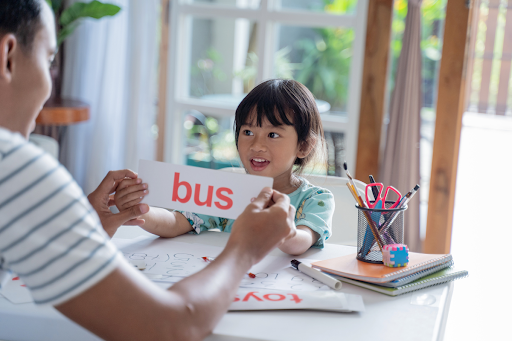
Sight words relieve that load. When a child recognizes “the,” “and,” “was,” and “they” automatically, without thinking, they can spend their mental energy on the words that carry meaning and on following the story as a whole. Reading becomes faster, smoother, and far more enjoyable as a result. Children who build a strong sight word bank early tend to develop reading fluency significantly faster than those who don’t. That’s exactly why knowing how to teach sight words at home can make such a meaningful difference in the early years.
Knowing how to teach sight words at home is one of the most practical and direct things you can do to support your child’s reading fluency. It doesn’t take much time, and the payoff shows up quickly in how smoothly your child reads.
👉 Related reading: Reading Milestones by Age: Is Your Child on Track?
Sight Words vs. Phonics: Do You Need Both?
This is one of the most common questions parents ask, and the short answer is yes, you need both. They work best together, not as competing approaches.
Phonics teaches children the rules for decoding words they’ve never seen before by connecting letters to sounds. Sight words fill the gap for common words that don’t follow those rules reliably. Think of phonics as the engine and sight words as the fuel. A child needs both to read smoothly and confidently.
The research on this is clear. Children who receive instruction in both phonics and high-frequency sight words develop stronger reading skills than those taught using only one approach. So rather than choosing between the two, the goal is to weave both into your child’s daily reading practice, using phonics for decodable words and sight word recognition for everything else.
👉 Related reading: Phonics and Early Reading at Home: A Parent’s Guide
Which Sight Words Should You Teach First?
There are two main lists that educators use to guide sight word instruction, and it helps to know the difference between them.
The Dolch Sight Word List
The Dolch list was developed in the 1930s and remains one of the most widely used sight word references in schools today. It contains 220 service words plus 95 common nouns, organized by grade level from Pre-K through third grade. Words like a, the, and, to, said, he, she, we, they appear at the earliest levels. The Dolch list is a great starting point for preschool and kindergarten-age children.
The Fry Sight Word List
The Fry list was developed in the 1950s and updated in the 1980s. It contains 1,000 words organized by how often they appear in written English, so the first words on the list are the ones children will encounter most often in real reading. Many schools use the first 100 or 200 Fry words as their core sight word curriculum. The Fry list is often considered more comprehensive and is commonly used for first grade and beyond.
For most families, the simplest approach is to start with whichever list your child’s school uses. Consistency between home and school practice accelerates learning significantly. If you’re not sure which list your child’s school follows, just ask their teacher. As a general guide, here are the first words to focus on at each level:
| Level | Focus Sight Words |
|---|---|
| Pre-K | a, and, the, to, I, is, in, it, of, you |
| Kindergarten | said, was, he, she, we, they, do, are, his, her |
| First Grade | could, would, should, because, after, every, from, give, have, him |
| Second Grade | always, around, before, does, don’t, fast, first, goes, made, many |
When Should You Start Teaching Sight Words at Home?
Most children are ready to begin learning their first sight words around age 4 to 5, typically when they have a solid grasp of the alphabet and can recognize most letters by name. That said, the groundwork for sight word recognition starts much earlier. Every time you read aloud to your toddler and point to words on the page, you’re building the print awareness and visual memory that sight word learning depends on.
For formal sight word practice like flashcards, word games, and writing activities, kindergarten age (5 to 6) is the sweet spot for most children. By first grade, schools typically expect children to recognize between 50 and 100 sight words automatically. If your child is showing readiness earlier, there’s no reason to wait. Start with just a handful of the most common words and build gradually from there.
How to Teach Sight Words at Home Step by Step
Step 1: Introduce Only 3 to 5 Words at a Time
One of the most important principles of effective sight word instruction is keeping the number of new words small. Introducing too many at once overwhelms working memory and leads to confusion rather than learning. Start with three to five words, practice them daily until your child recognizes them automatically without any hesitation, and only then introduce the next set. Slow and steady produces far better results than rushing through a long list.
Step 2: Use Multi-Sensory Practice
Children learn sight words more effectively when they encounter them through multiple senses rather than just looking at a flashcard. In addition to seeing the word, have your child say it aloud, spell it out loud, trace it with their finger, write it in sand, stamp it with letter tiles, or build it with magnetic letters. Visual, auditory, and kinesthetic practice each strengthen a different memory pathway, and together they make words much more likely to stick.
Step 3: Practice Little and Often
Sight word practice works best in short, frequent sessions rather than long, occasional ones. Five to ten minutes of daily practice is far more effective than thirty minutes once a week. Sight word recognition is built through repetition over time. The more often a child sees and reads a word, the faster and more automatic their recognition becomes. Weaving sight word practice into your existing reading routine is the easiest way to make this happen consistently, and it’s one of the simplest parts of learning how to teach sight words at home effectively.
Step 4: Always Connect Words to Real Reading
Flashcard practice alone isn’t enough. For sight words to truly stick, children need to see them in context: in real books, on signs, in their environment, and in their own writing. When you’re reading together and a sight word appears, point it out. Say something like “There’s our word ‘said,’ can you see it?” When your child spots a sight word on their own, celebrate it. Connecting isolated word practice to real reading is what transforms memorization into genuine automatic recognition.
Step 5: Review Old Words While Introducing New Ones
It’s easy to assume that once a child knows a sight word, they’ll always know it. In reality, sight words need regular review to stay automatic, especially in the early stages. As you introduce new words, keep cycling back to previously learned ones. A simple way to do this is to keep a “known words” pile and a “learning words” pile, reviewing both briefly each day. This spaced repetition approach is one of the most research-supported methods for long-term memory retention.
Step 6: Keep It Positive and Pressure-Free
Sight word practice should feel like a game, not a test. If your child gets a word wrong, simply say it for them, have them repeat it, and move on without making it a big moment. Avoid drilling in a way that feels high-stakes. Children learn best when they feel safe to make mistakes and when reading feels like something fun they get to do with you, rather than something they’re being evaluated on.
10 Fun Sight Word Activities for Kids
These are some of the most effective and enjoyable sight word activities you can do at home. Most of them require no special materials and take less than ten minutes.
1. Flashcard Games
Classic flashcards work well when used playfully rather than as a drill. Try “beat the clock” to see how many your child can read in one minute, play “go fish” with two sets of matching word cards, or set up a simple matching memory game where they flip cards over to find pairs. The key is keeping the energy light and the sessions short.
2. Sight Word Hopscotch
Write sight words in chalk squares on your driveway or sidewalk and call out a word for your child to hop to. Alternatively, write the words on paper squares inside and have your child jump from one to the next. Getting the body moving actually helps memory consolidation. Physical movement and learning are more connected than most people realize.
3. Playdough Word Building
Show your child a sight word on a flashcard, then have them roll playdough into letters and build the word themselves. This multi-sensory activity combines visual recognition with fine motor practice, and most children find it genuinely enjoyable. It doesn’t feel like studying at all.
4. Rainbow Writing
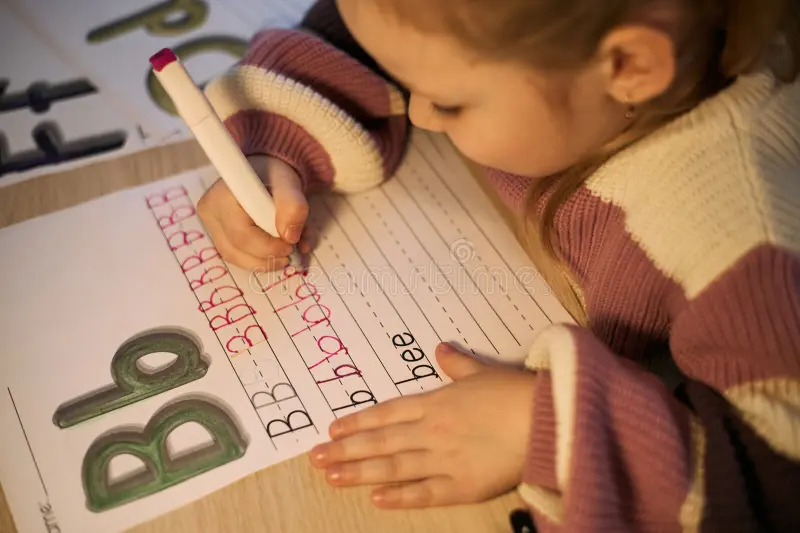
Write a sight word lightly in pencil and have your child trace over it repeatedly in different colors, red, then orange, then yellow, and so on, until they’ve created a rainbow word. Each tracing reinforces the spelling and shape of the word through muscle memory. It’s a simple activity that children tend to find oddly satisfying.
5. Sight Word Scavenger Hunt
Write target sight words on sticky notes and hide them around the house. Give your child a list or flashcard set and send them on a hunt to find and match each word. When they find one, they read it aloud before collecting it. This activity builds word recognition while adding a genuinely fun element of excitement and movement.
6. Word Swat
Lay several sight word cards on the floor or table. Call out a word and have your child swat it with a fly swatter, slap it with their hand, or tap it with a foam sword. This high-energy game is particularly great for children who struggle to sit still. The physical action makes the activity memorable and burns off some energy in the process.
7. Sight Word Sentences
Once your child knows a handful of words, give them a set of word cards and challenge them to build a real sentence. This activity bridges the gap between isolated word recognition and reading in context, which is one of the most important steps in moving from flashcard practice to real reading fluency.
8. Word Hunting in Books
During your regular reading time, give your child one target sight word and challenge them to find it every time it appears on the page. This simple activity keeps children actively engaged during read-alouds while reinforcing word recognition in a real reading context, which is ultimately the goal of all sight word practice.
9. Magnetic Letter Spelling
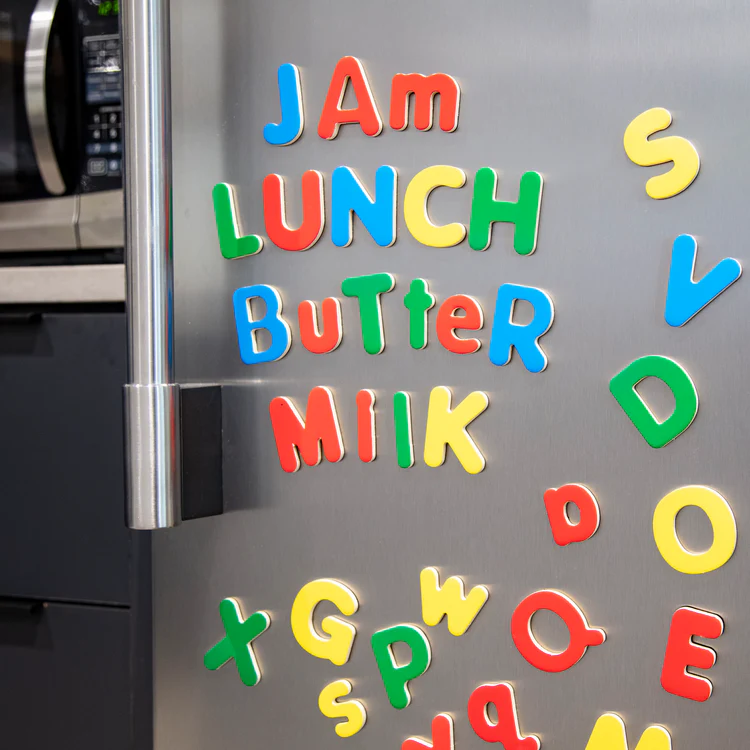
Keep a set of magnetic letters on the fridge and pull them out for a few minutes of sight word building during meals or while you’re cooking. Say a word, have your child find the letters and put them in order. This is one of the easiest ways to weave sight word practice into daily life without it feeling like a separate activity at all.
10. Sight Word Bingo
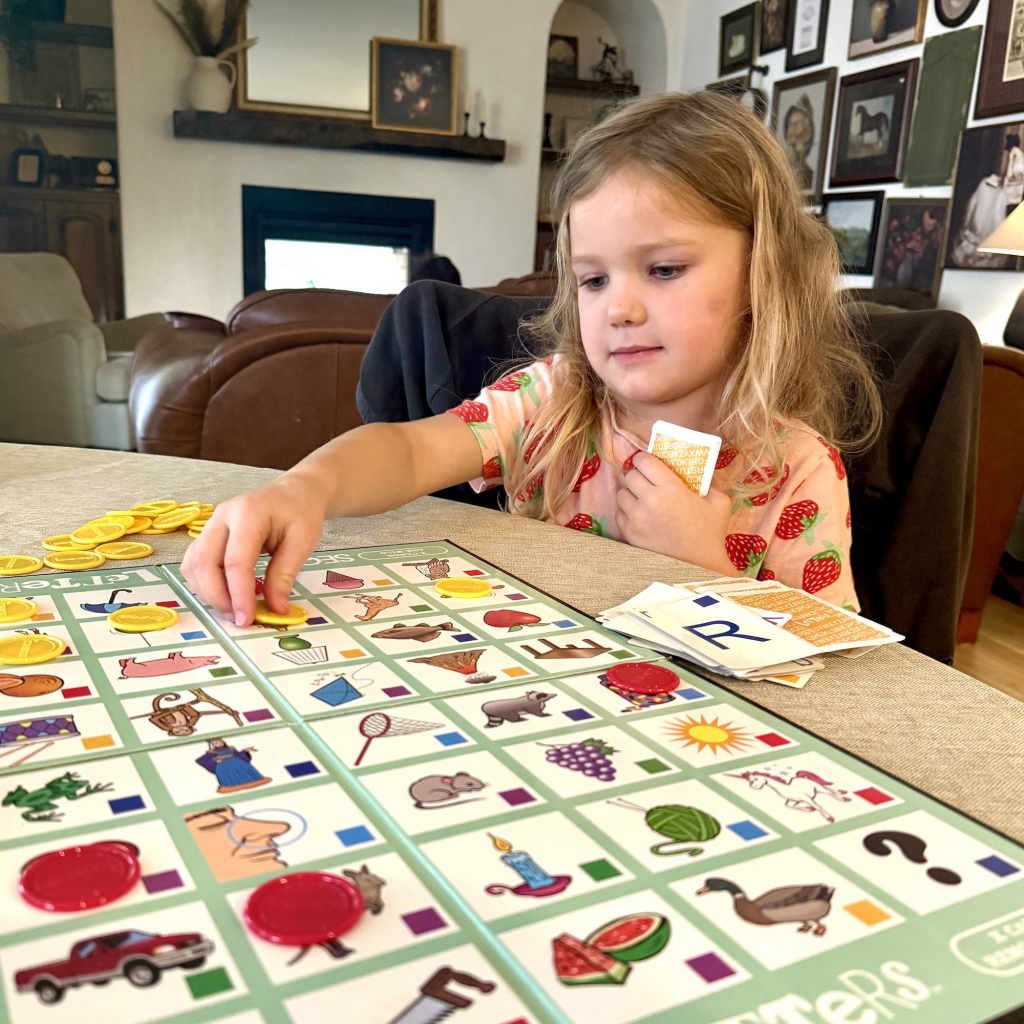
Create simple bingo cards with sight words instead of numbers. You can make these easily on paper or find free printable versions online. Call out words randomly and have your child cover them. This works especially well for families with multiple children, since everyone can play together and the competitive element keeps motivation high.
Sight Word Tips by Age
Ages 3 to 4 (Pre-K)
At this age, sight word practice should be completely informal and play-based. Rather than formal flashcard sessions, focus on print awareness. Point to words as you read aloud, notice letters in the environment, and play with alphabet games. If your child shows interest in specific words like their name or simple words like “cat” or “the,” introduce those naturally without any pressure. The goal at this stage is to build a love of words and print, not to memorize a list.
Ages 4 to 6 (Kindergarten)
This is the prime window for beginning structured sight word practice. Start with the first 20 to 30 Dolch or Fry words, introduce three to five at a time, and use a mix of flashcard games and hands-on activities to keep things fresh. At this age, five to ten minutes of daily practice is ideal. Any longer and attention starts to fade. By the end of kindergarten, aim for your child to recognize 25 to 50 sight words automatically.
Ages 6 to 7 (First Grade)
First grade is when sight word knowledge really accelerates. Most first graders are expected to recognize 100 or more sight words by the end of the year. In addition to the activities above, encourage your child to notice and read sight words independently during their own reading time. Many words that required active practice in kindergarten should be becoming truly automatic by now, and you’ll notice reading fluency improving as a direct result.
Ages 7 to 8 (Second Grade and Beyond)
By second grade, most children have internalized the core sight word lists and recognition is becoming automatic. Some children still have gaps, particularly with less common words or words they encounter less frequently. If your child is still hesitating on basic sight words in second grade, targeted daily review of their specific gaps is the most efficient approach. Focus practice on the words still causing stumbles rather than repeating ones they already know well.
Common Mistakes Parents Make When Teaching Sight Words at Home
Even well-intentioned parents can accidentally make sight word learning harder than it needs to be. Here are the most common pitfalls to avoid:
- Introducing too many words at once. More is not better when it comes to sight words. Three to five new words at a time is the sweet spot. Beyond that, children’s working memory gets overwhelmed and nothing sticks.
- Only using flashcards. Flashcards have their place, but relying on them exclusively misses the multi-sensory and contextual practice that really cements sight word recognition. Mix in games, writing, movement, and real book reading.
- Skipping review of old words. Once a word is learned it still needs occasional review to stay automatic. Without regular cycling back to previously learned words, children can forget them surprisingly quickly.
- Making it feel like a test. If your child senses that getting a word wrong is a big deal, anxiety kicks in and learning shuts down. Keep the tone light, celebrate effort, and treat mistakes as a normal part of the process.
- Practicing in isolation only. The ultimate goal of sight word practice is to support real reading, so always connect word practice back to books. If your child knows “said” on a flashcard but can’t spot it in a sentence, the learning isn’t complete yet.
- Giving up too soon. Some children take longer than others to internalize sight words, and that’s completely normal. Consistent daily practice over weeks and months is what produces lasting results.
Free Tools to Help You Teach Sight Words at Home
Several free tools are particularly well suited to reinforcing sight word practice at home:
- Endless Reader: One of the best free apps for sight word practice. It teaches each word through animation and humor, then shows it used in a sentence, which is exactly the kind of contextual learning that makes words stick.
- Starfall: A structured phonics and early reading program that also covers high-frequency words in context through interactive stories and activities.
- Khan Academy Kids: Covers sight words as part of a broader early literacy curriculum, with adaptive lessons that adjust to your child’s current level.
- Epic!: A vast digital book library where children can read books that naturally reinforce sight word recognition in context, which is the most authentic form of sight word practice there is.
👉 Related reading: Top 10 Free Reading Tools for Kids
Final Thoughts
Knowing how to teach sight words at home is one of the most practical things you can do to support your child’s early reading journey. It doesn’t have to be complicated, time-consuming, or stressful. A few minutes of playful, consistent practice each day combined with plenty of real book reading is genuinely all it takes for most children to build strong sight word recognition over time.
Every child learns at their own pace. Some will fly through the sight word lists while others will need more time and repetition. Both are completely normal. As you figure out how to teach sight words at home, you will realize your job is never to rush the process. It’s to show up consistently, keep it enjoyable, and trust that the effort you’re putting in now is building a reading foundation that will serve your child for years to come.

👉 Related reading: Best Books for Beginning Readers
👉 Related reading: Why Your Child Can Read But Doesn’t Understand
FAQ: How to Teach Sight Words at Home
How do you teach sight words at home effectively?
The most effective approach combines short daily practice sessions, multi-sensory activities, and regular review of previously learned words, all connected back to real book reading. Introduce only three to five new words at a time, keep sessions to five to ten minutes, and use games and hands-on activities to keep practice feeling fun rather than like a chore. Consistency over weeks and months is what produces lasting sight word recognition.
What age should you start teaching sight words?
Most children are ready to begin structured sight word practice around age 4 to 5, once they have a solid grasp of the alphabet and can recognize most letters by name. Informal exposure like pointing to words during read-alouds and noticing words in the environment can start even earlier. By the end of kindergarten, most children are expected to recognize 25 to 50 sight words automatically.
How many sight words should I teach at a time?
Three to five words at a time is the recommended amount for most children. Introducing more than that at once overwhelms working memory and makes it harder for any individual word to stick. Focus on a small set until your child recognizes each word instantly without hesitation, then move on to the next group while continuing to review the ones already learned.
What is the difference between Dolch and Fry sight words?
The Dolch list contains 220 common service words plus 95 nouns, organized by grade level from Pre-K through third grade. The Fry list contains 1,000 words organized by frequency of use in written English. Both lists are widely used in schools and both are effective. The most important thing is consistency between whatever list your child’s school uses and what you practice at home. When in doubt, ask your child’s teacher which list they follow.
How long does it take to learn sight words?
With consistent daily practice of five to ten minutes, most children can learn to recognize a new set of three to five sight words within one to two weeks. Truly automatic recognition, where a child reads the word instantly without any pause, usually takes longer and requires repeated exposure in different contexts over several weeks. Building a complete sight word bank through the kindergarten and first grade lists typically takes the full school year with regular practice.
My child keeps forgetting sight words they already knew. Is that normal?
Completely normal and very common. Sight word retention requires regular review even after a word seems learned. Without continued practice, words that seemed automatic can fade, particularly if your child hasn’t encountered them in real reading for a while. The solution is to keep cycling back to previously learned words as part of your regular practice, rather than assuming a word is locked in forever after one successful round. Reviewing words at increasing intervals over time is the most effective approach for long-term retention.


Interesante. Vídeo IA rápido: Van Gogh Free AI Video Generator . Van Gogh Free AI Video Generator